
New to bikepacking and not sure where to start? In this guide, you’ll learn how to choose your bikepacking bike, so you can find the perfect match for your upcoming adventures.
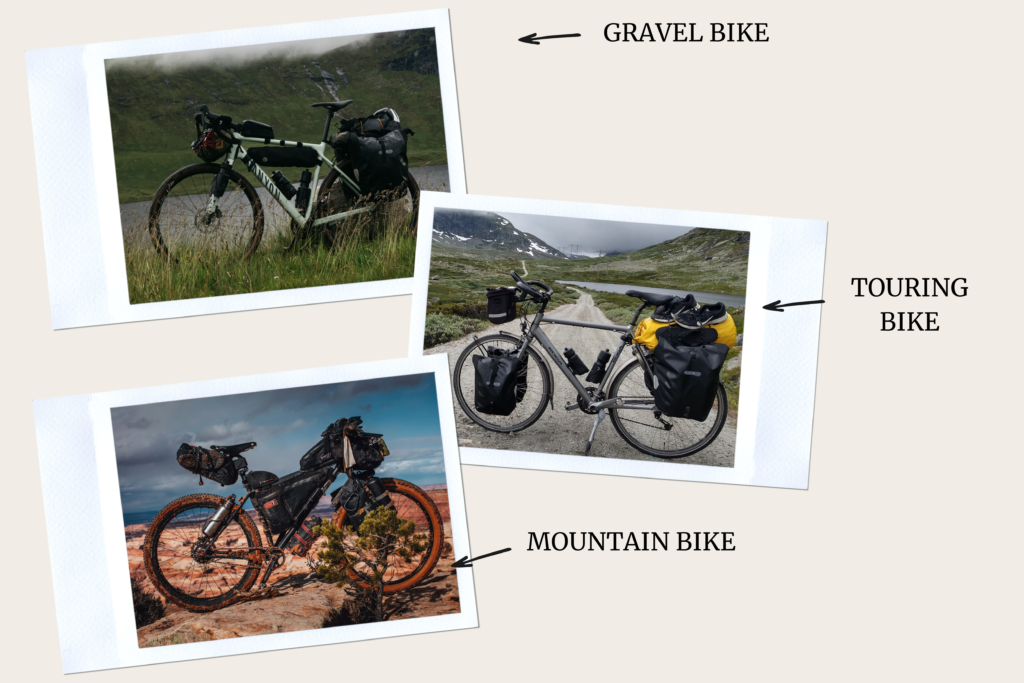
Which bike suits you best? There basically are three options to choose from:
1. Gravel bike
2. Touring bike
3. Mountain bike
Each of these has its unique pros and cons, which we will have a further look at in this article.
How to choose your bikepacking bike?
A bikepacking bike can be a big investment, so it is good to think about it carefully. We’ll discuss the three options below:
1. GRAVEL BIKE
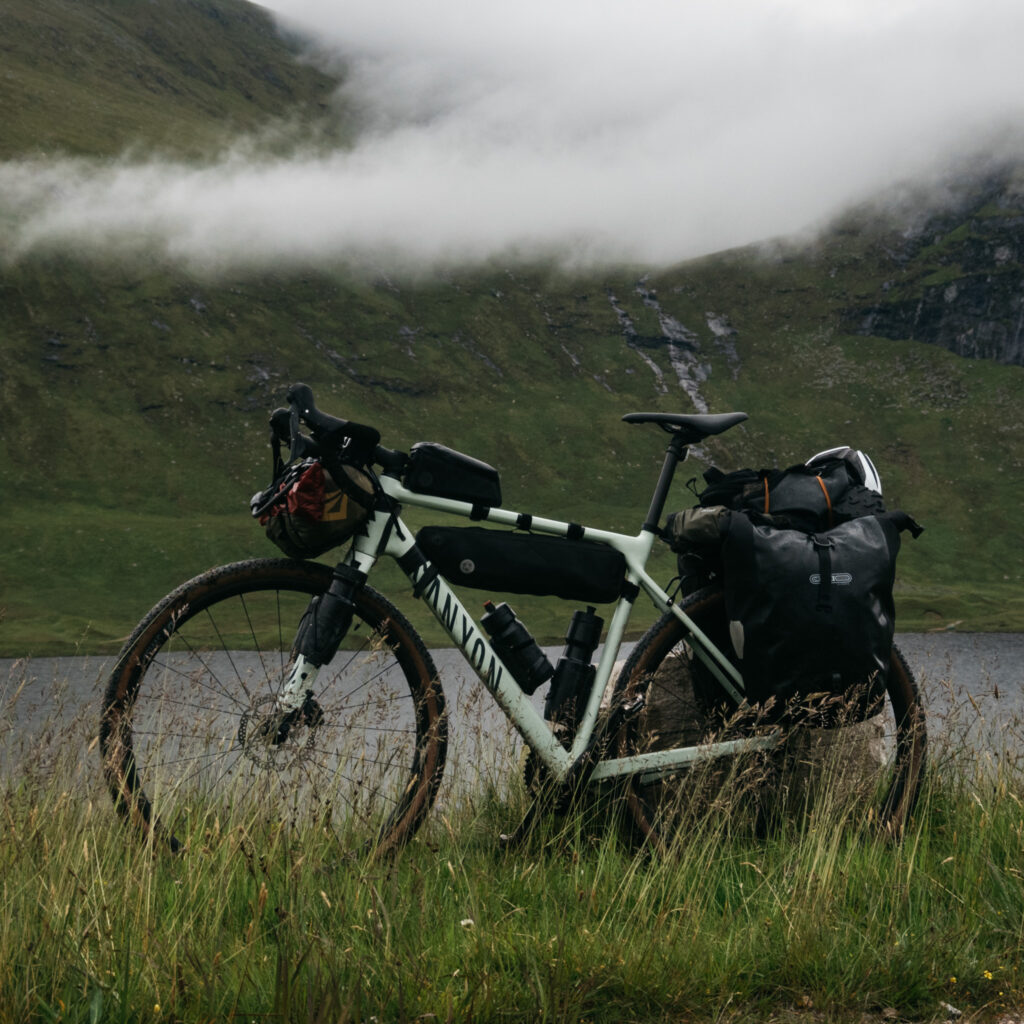
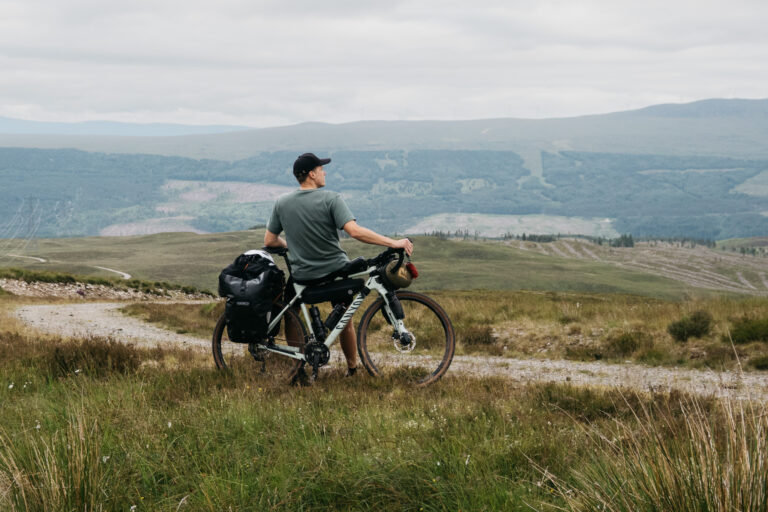
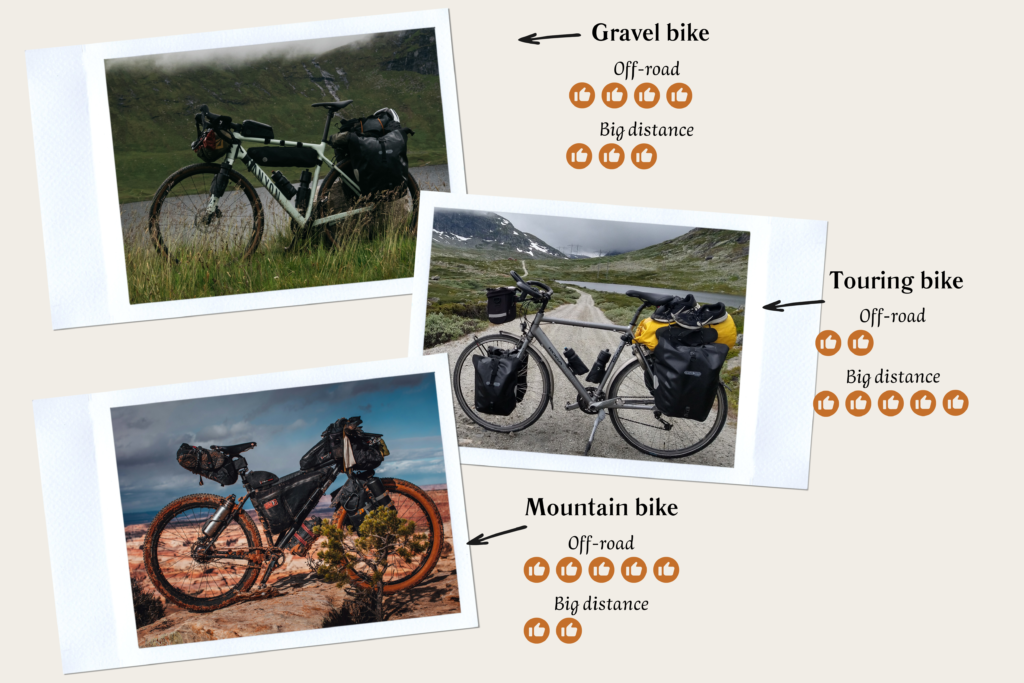
You will most often encounter bikepackers on a gravel bike. A gravel bike is an excellent middle-ground choice. Combining elements of both touring and mountain bikes.
The big advantage is that you will have more off-road adventures with this choice than with a touring bike. The main reasons for this is the tire width, but also the fact that the bags hang higher and are therefore less likely to get caught on plants, bushes or other things.
Is your plan to cycle more on unpaved roads, such as gravel and sand paths? If so, it’s essential to choose a bike that can handle this type of terrain. In that case, it’s better to opt for a gravel or mountain bike.
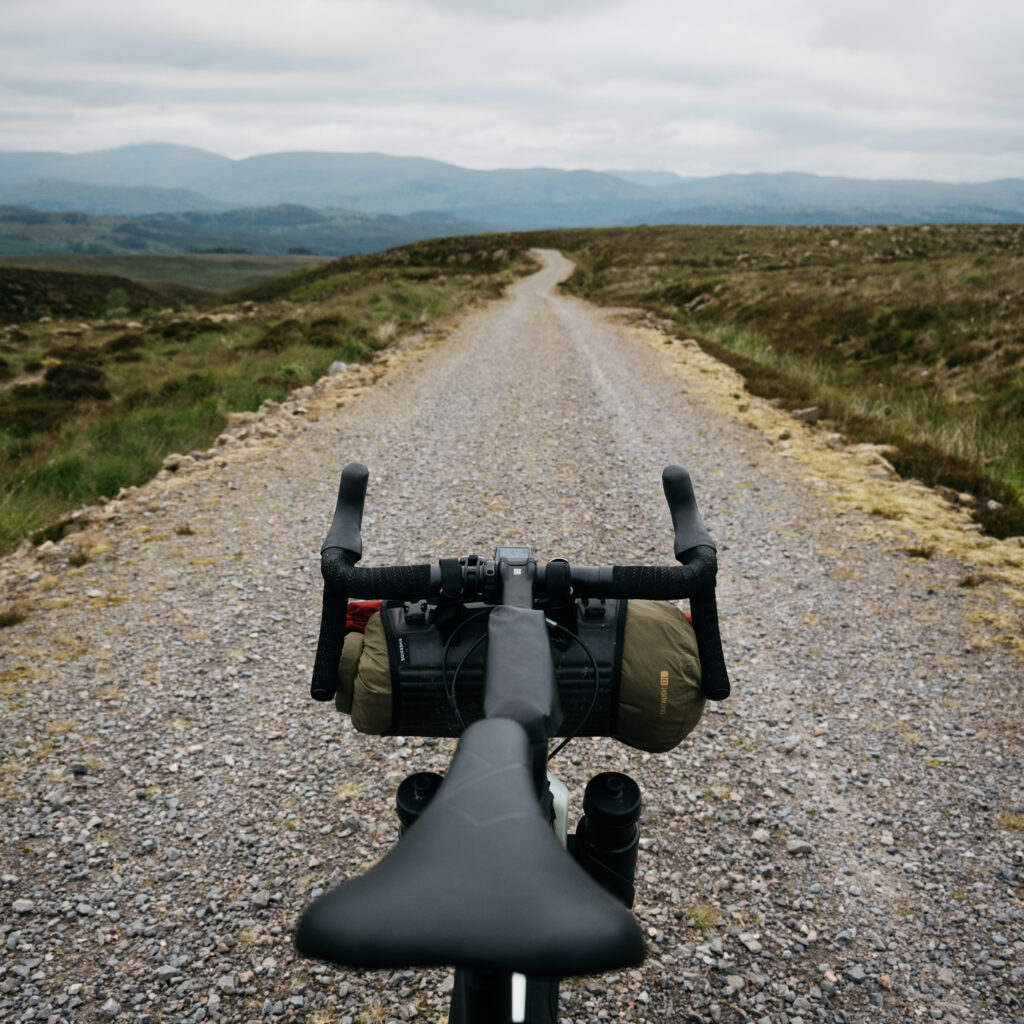
GRAVEL BIKE: What to consider?
Unlike bike touring, a gravel bike frame isn’t designed to carry as much weight. As a result, you’ll usually bring the essentials. This means less space and fewer luxuries (as far as bikepacking can be called a luxury), but it also encourages a more minimalist style of travel.
Because of this, you’ll need to pay closer attention to weight and packing space. A gravel bike is therefore perfect for overnighters or multi-day trips. However, for adventures lasting several months or even years, a touring bike is generally the better choice.
A gravel bike is an excellent middle-ground choice. Combining elements of both touring and mountain bikes.
Pros:
- You can do more off-road paths than with a touring bike
- It’s more lightweight than a touring or mountain bike
- More comfortable on gravel- and sand roads than a touring bike
- Suitable for 4-season use: snow, mud, sand and in forests
Cons:
- There is less space for your stuff than with a touring bike. So your adventures will be less luxury than with a touring bike
- It’s likely that you’ll have to invest more in your gear to reduce the weight and space
- Gravel bikes are great for shorter adventures, but for very long trips, I do recommend a touring bike
How to choose your bikepacking bike?
2. TOURING BIKE
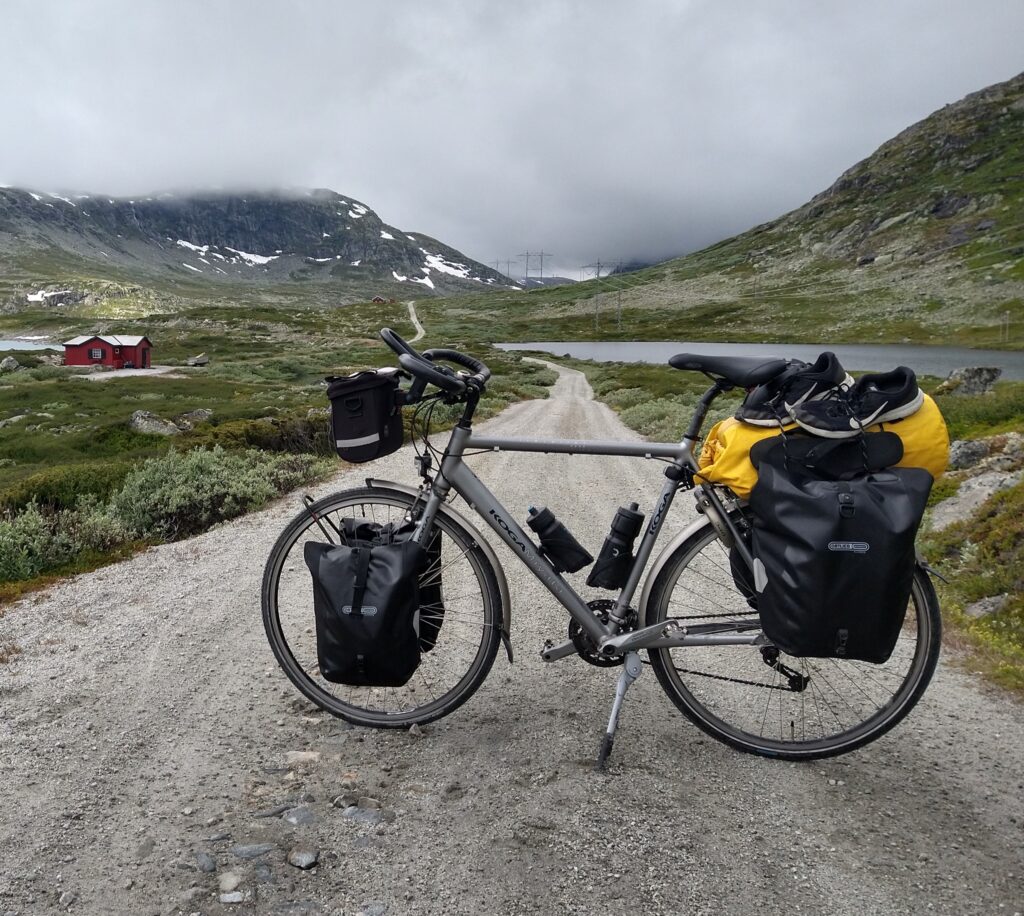
Next up is the touring bike. I personally started bikepacking with a touring bike, and I consider it a great starter bike to get to know bikepacking.
The main advantage of a touring bike is that it allows you to carry significantly more gear compared to the other two options. This makes it an excellent choice for longer trips. If you expect most of your adventures to last four weeks or more, a touring bike is definitely worth considering.
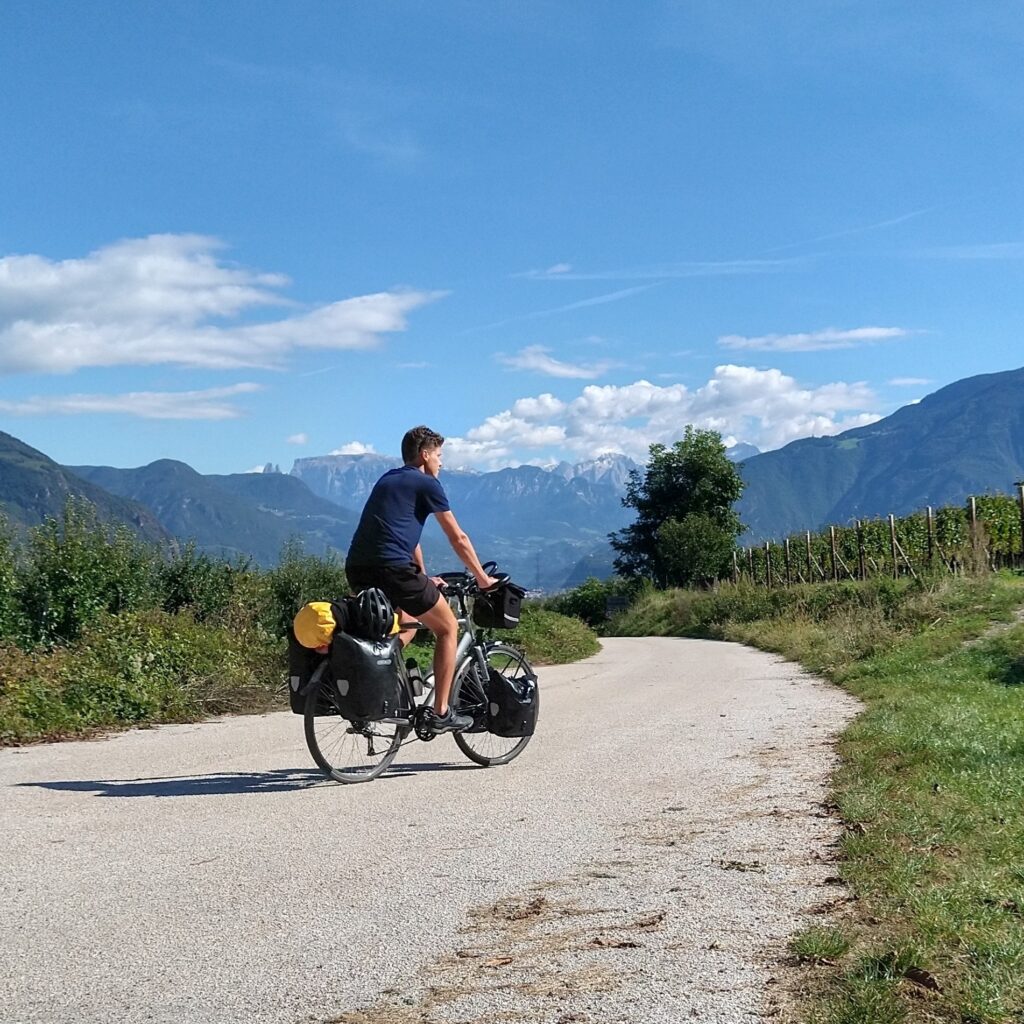
Also, a touring bike doesn’t require much technical skill, as you’ll be riding mostly on paved or well-maintained roads, making it a safer option. Plus, when traveling with family, it’s useful to carry extra gear like food, kitchen utensils, and other essentials.
The big downside and major advantage of a touring bike
All of the above also highlights the main downside of a touring bike: your bikepacking adventures feel less adventurous and extreme. You’ll rarely hit off-road trails, meaning you’ll spend less time in remote or wild areas.
The big advantage is that you can enjoy a more comfortable and luxurious lifestyle during your trip. You can carry more food, clothing, devices, or even a foldable chair. A touring bike makes life on the road easier, and after a long day of cycling, that extra comfort can make all the difference.
Pros:
- You can take way more stuff
- Best for trips that take a couple of weeks, months, or years
- A more luxurious lifestyle
Cons:
- More luxury means more weight
- It’s less off-road
- Less adventurous, wild, and extreme
- It’s not as great on gravel and sand paths as a gravel or mountain bike
How to choose your bikepacking bike?
3. MOUNTAIN BIKE
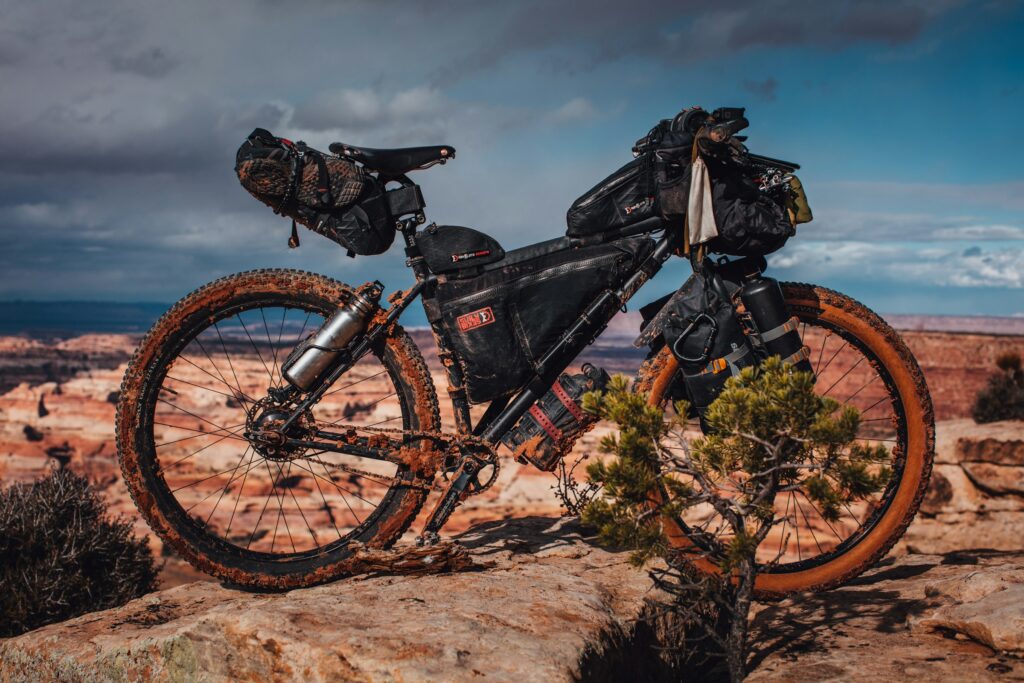
Broadly speaking, you won’t come across many bikepackers on mountain bikes. That said, there are some regions where they seem more common. From what I’ve seen in bikepacking content, mountain bikes seem to be quite popular in North American countries.
The biggest advantage of a mountain bike is that you can take the most wild and off-road paths. A mountain bike also provides extra comfort on these roads because of its suspension.
If you know in advance that you will mostly do overnighters or trips of only a few days, and that the areas where you will be bikepacking are mainly off-road with poor road surfaces, then the mountain bike is definitely an option to consider.
Something to keep in mind is that with a mountain bike, you can carry less gear than with the other two types of bikes. The suspension causes the frame to flex and move, so you need to make sure your bags have enough space and don’t get caught. This often comes at the expense of valuable space, which is already limited when bikepacking.
Keep the following in mind when buying a mountain bike
With gravel and touring bikes, you often find certain types that are designed for bikepacking. You can recognize this when the designer thinks along about options for storing your luggage. For example, in the front fork you’ll find various options to put a rack to which you can attach your bags.
While this is often carefully considered with touring and gravel bikes, it’s less common with mountain bikes. So, when buying a mountain bike for bikepacking, make sure it has options for attaching your bags.
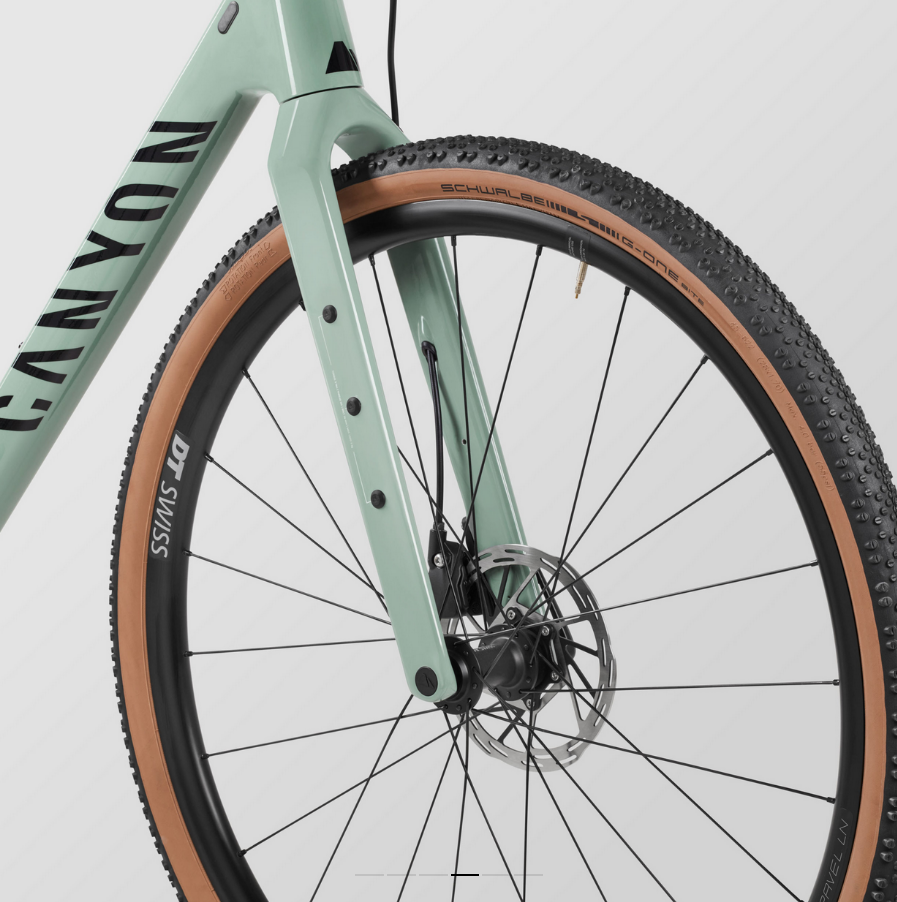
Mountain bikes with single suspension are called hard tails. Full suspension mountain bikes also have rear suspension. They are therefore heavier, but at the same time the suspension provides more comfort and control.
Pros:
- Most comfortable option on rough or poor road surfaces
- The most adventurous choice, offering the greatest off-road possibilities
- Allows you to cycle in unique places inaccessible to the other two options
Cons:
- Least storage space for your gear
- Offers the least luxurious lifestyle
- You’ll likely need to invest more in lightweight gear to save space and weight
- Less suitable for long trips
- Heavier than the other two bikes due to extra suspension
How to choose your bikepacking bike?
KEY QUESTIONS: How to choose your perfect bikepacking bike?
Exercise: each bike has its pros and cons. To help determine which bike suits your bikepacking needs, answer the following questions:
- Do you prefer some level of comfort and luxury, or are you fine with a more minimalist lifestyle?
- How important is versatility if you plan to use the bike for other cycling activities?
- Will your adventures mostly follow paved roads or off-road trails?
- Do you prioritize speed and efficiency, or comfort and stability?
- What kind of weather conditions do you expect to encounter?
- Are you planning longer trips or shorter ones?
- How much gear do you plan to carry?
How to choose your bikepacking bike?
How to choose your bikepacking bike?
I hope this article helped you on how to choose your perfect bikepacking bike. Any questions? Feel free reaching out to me on Instagram, I’m happy to help!
Also, I regularly share travel stories, hiking guides, and tips & tricks. You can check out all the adventures on Instagram.
Want to keep reading? You can find all posts here.
– Bart