
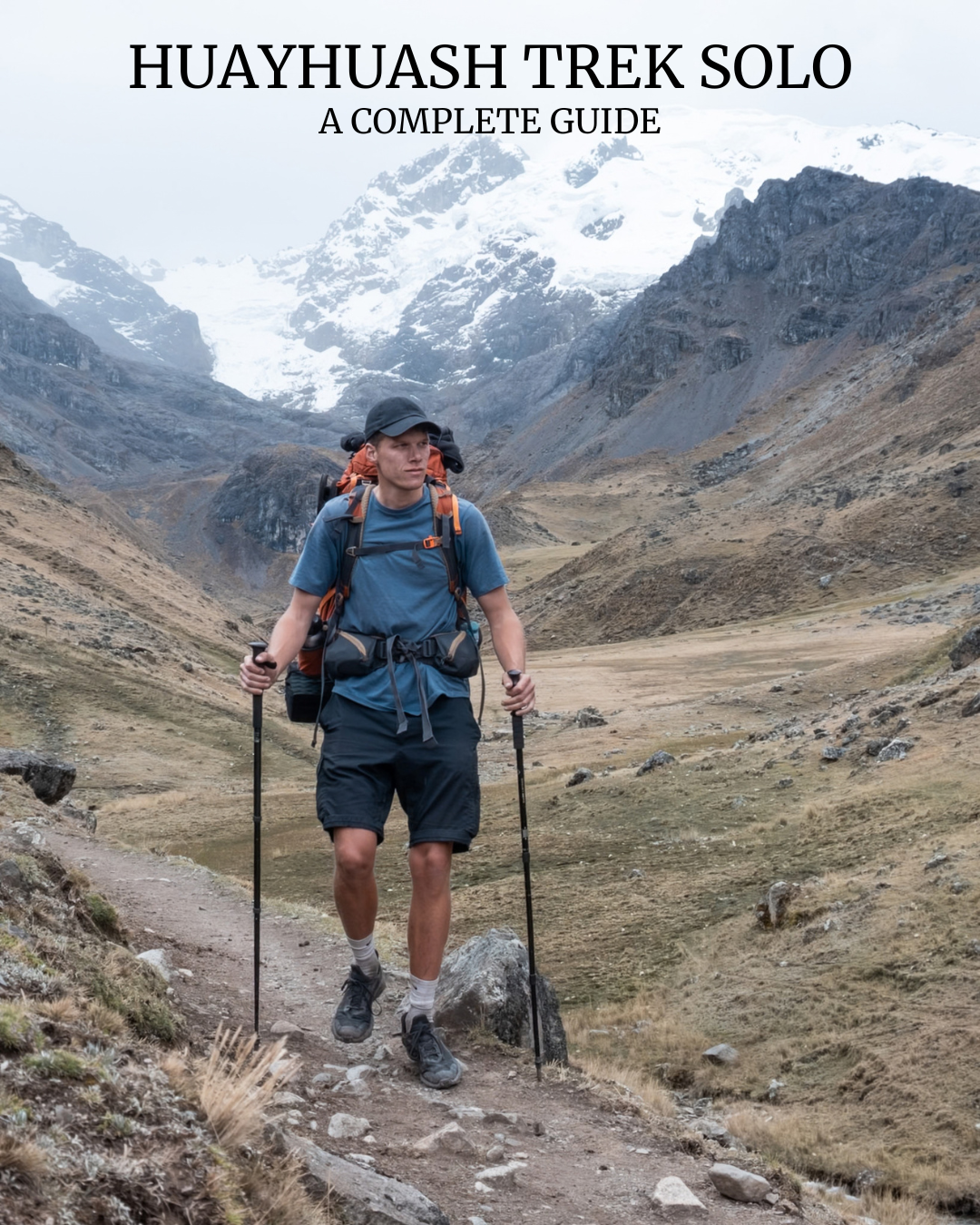
How to hike the Huayhuash Trek solo?
I’ve done many hikes in my life, but I can with certainty say that the Huayhuash Trek has been the best one so far.
If you’re planning to do this hike solo, or independently with a small group, it’s important to prepare well. The Huayhuash Trek is very remote, and you won’t be able to rely on outside help or frequent passing hikers.
In this guide we’ll go through all the things you need to know, prepare, and do.
Feel free to reach out to me on Instagram if you have any questions, I’m happy to help!
last updated October 1, 2026.
HUAYHUASH TREK: GENERAL INFORMATION
- What is the Huayhuash Trek?
- How difficult is hiking the Huayhuash Trek solo?
- Huayhuash Trek stats and ratings
- Highlights of the Huayhuash Trek
PLANNING YOUR SOLO HUAYHUASH TREK
- Getting to the Huayhuash Trek trail head
- Renting and buying gear
- Huayhuash costs overview
- Hiking the Huayhuash Trek solo, with a tour, or with a guide?
- Where to stay?
HUAYHUASH TREK ROUTE & PERSONAL EXPERIENCE
- Route information
- Camping at the Huayhuash Trek
- Huayhuash Trek: My solo adventure, the struggles and highlights
PREPARING FOR YOUR SOLO HUAYHUASH TREK
GENERAL INFORMATION
What is the Huayhuash Trek?
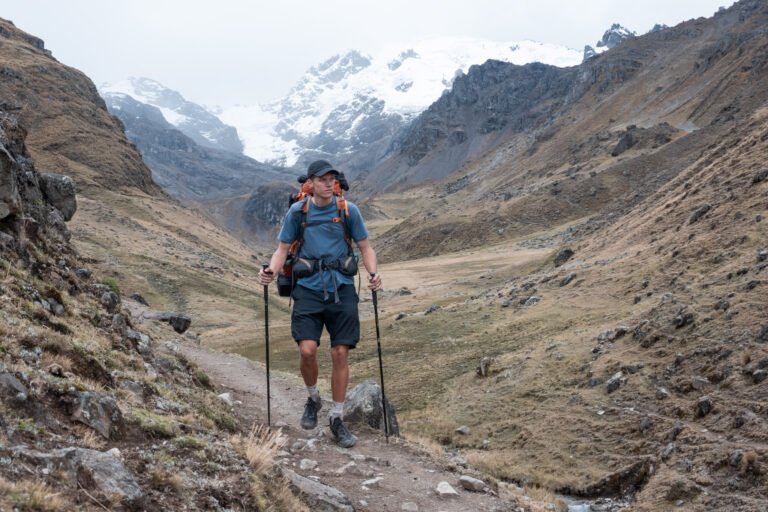
The Huayhuash Circuit is 105 kilometers with 5800 meters of elevation gain. In other words, it’s a serious trek and you must be well-prepared.
The best months to do this hike are from April until mid October. I did this hike in October, which was okay but not ideal, because this month is the transition into the rainy season. In October there was occasional snowfall and quite some rain.
Most of this hike is above 4000 meters of elevation, so it’s necessary to have adjusted to higher altitude for at least three days to prevent altitude sickness. Ideally, prepare with a few shorter hikes near Huaraz before starting this trek.
Also, keep in mind that at this elevation it gets much colder, while temperatures during day-time are quite comfortable, at night it can shift below freezing. Strong winds are common as well, so proper clothing and weatherproof gear are essential.
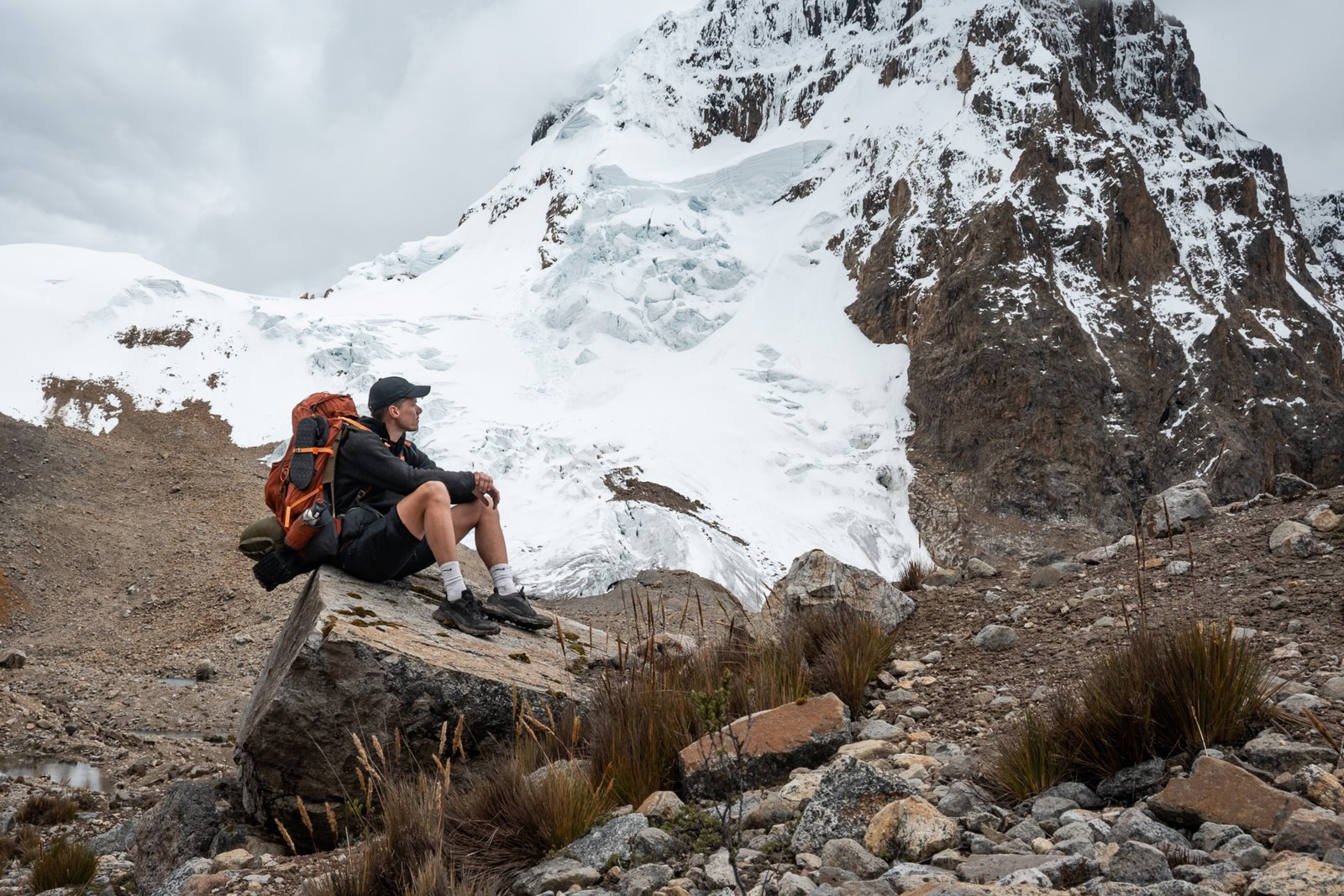
How difficult is hiking the Huayhuash Trek solo?
If you’re planning to do the Huayhuash Hike solo or without a guide, you definitely need moderate to advanced hiking experience. The classic Huayhuash Circuit typically takes 7 to 12 days.
If the Classic Huayhuash Circuit feels too demanding, you can opt for shorter variations, though you will miss out on a few highlights.
Each day, you’ll climb one mountain pass, some of them are steep and hard with your 15+ kilograms backpack. Also, almost all of this hike’s altitude is above 4000 meters, which makes it significantly harder. No technical climbing skills are needed, but the distance and elevation gain adds up.
Moreover, if you decide doing the Huayhuash solo, you’ll have to carry all of the gear by yourself.
That said, if you do check-off these boxes, hiking the Huayhuash Trek solo is 1000% worth it and will be an adventure of your lifetime.
Huayhuash Trek: stats and ratings
- Classic Huayhuash Circuit:
105 km with 5800 meters of elevation gain. - Highest point:
5150 meters at the Yanantauri Pass (Cerro Gran Vista). - Tourist density: Excellent 5/5
Compared to other famous hikes like the W-trek in Torres Del Paine or the Salkantay Trek near Cusco, the amount of people at the Huayhuash Trek is way less. - Difficulty level: Hard 4.5/5
This hike is incredibly rewarding, but don’t underestimate it. When going solo, you’ll need to carry all your food and gear, navigate the route yourself, and be fully self-sufficient. Expect lots of climbing, and only one supply point in Huayllapa. - Sights: Excellent 5/5
The most beautiful hike I’ve done in my life so far. - Camping: Excellent 5/5
Absolutely incredible. Full of flat spots to pitch your tent, many rivers, and unforgettable starry nights. Pitch your tent in the valley for warmer nights, and to be better protected against the wind.
Huayhuash Trek Highlights
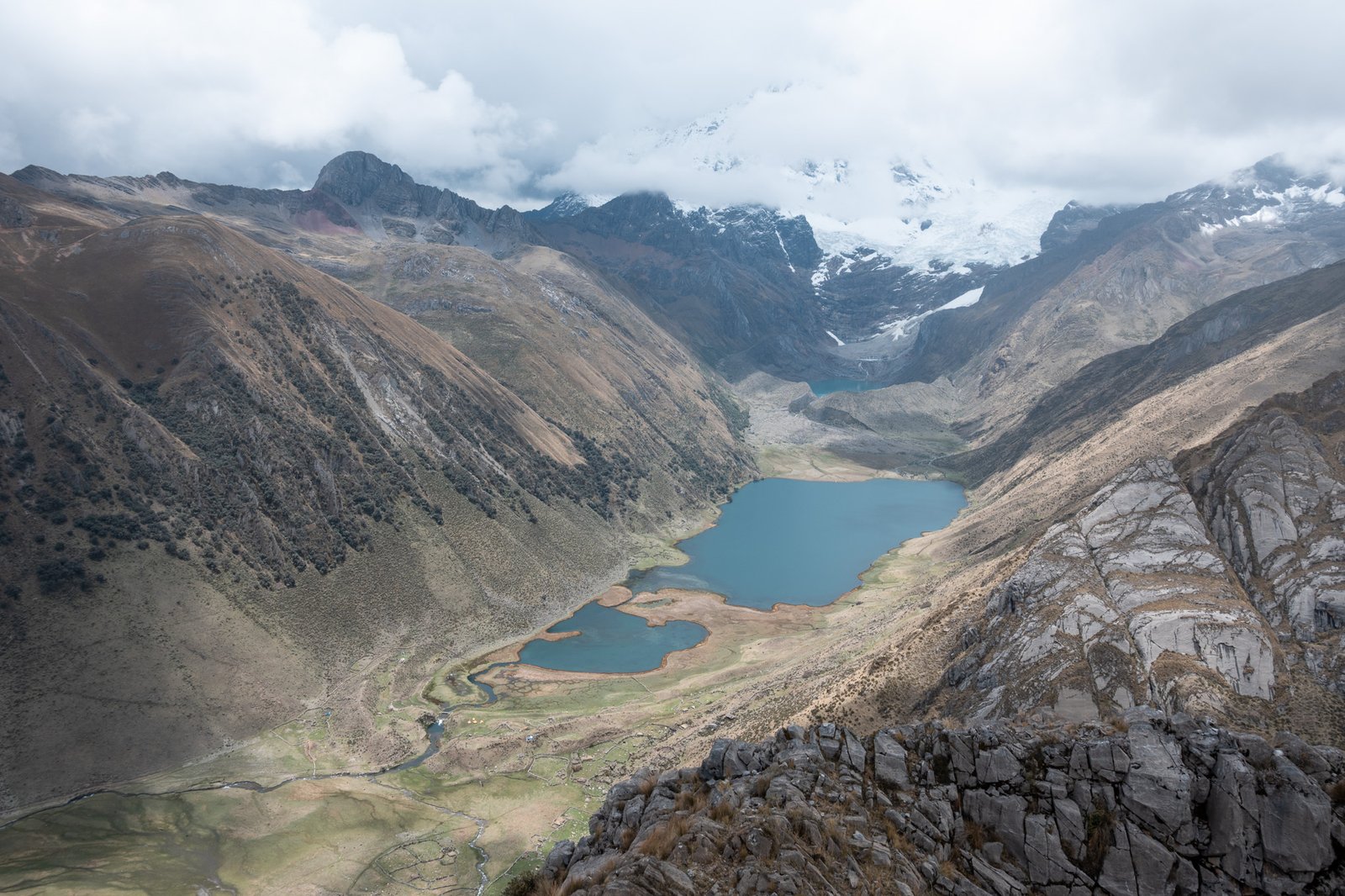
- Laguna Carhuacocha views
- Trapecio pass
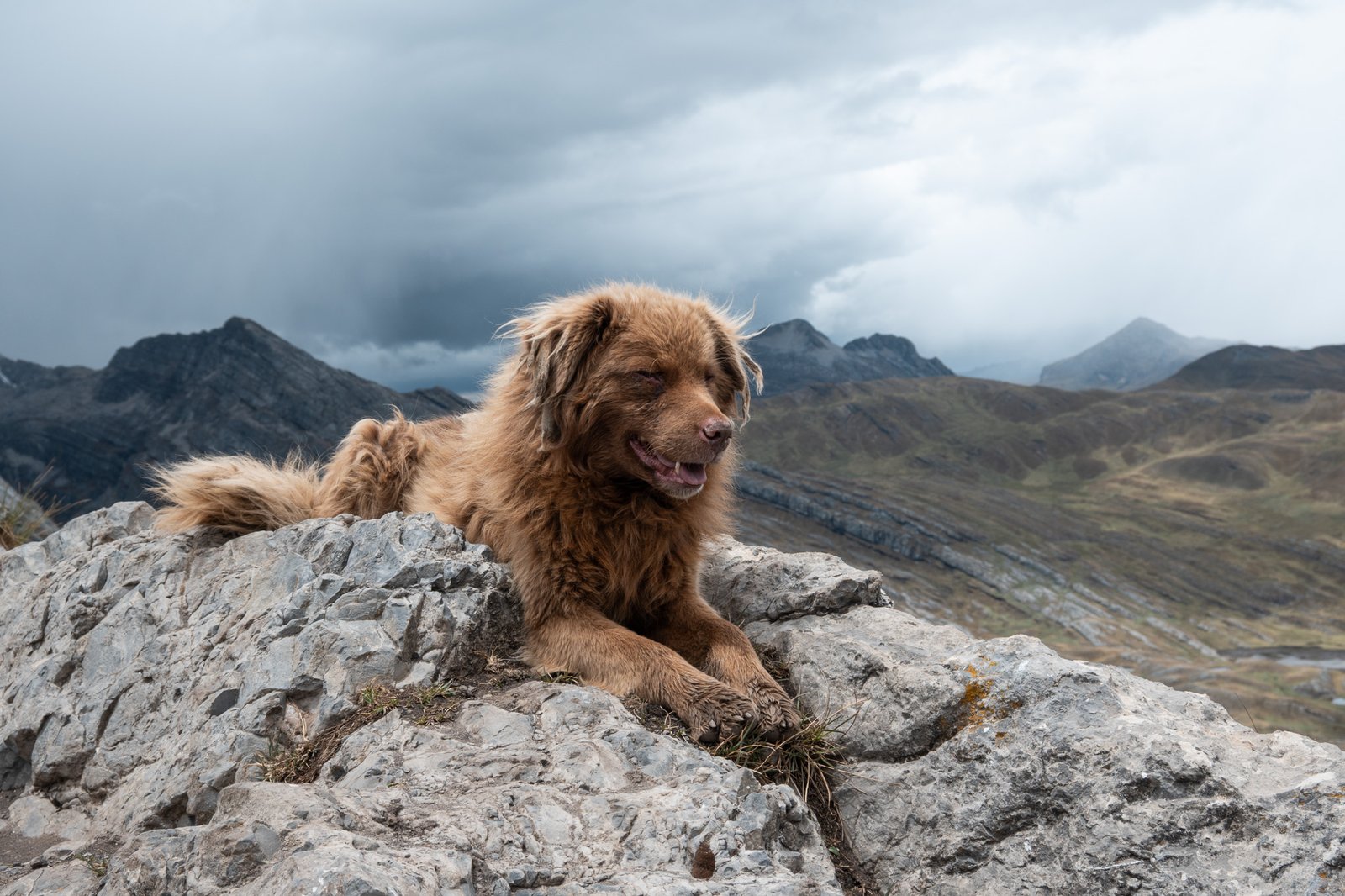
- Company of the Huayhuash dogs
- The Touching the Void locations
- Wild camping near Tres Lagunas
- Laguna Jahuacocha mirador
PLANNING YOUR SOLO HUAYHUASH
TREK ADVENTURE
How to get to the Huayhuash Trek trail head?
You have two options:
- Option 1: first go to Chiquián, and later to the Cuartelhuain trail head
- Option 2: directly to the Cuartelhuain trail head all the way from Huaraz
Option 1: first go to Chiquián, and later to the trail head (Cuartelhuain)
I choose to get to the trail head this way. The main reason being that the morning of starting the Huayhuash hike you don’t have to wake up as early as you would from Huaraz.
In Chiquián, I stayed at Hotel Los Nogales which was surprisingly nice and comfortable, all for a very reasonable price. They also offer breakfast, but you have to let them know the night before.
The ride from Huaraz to Chiquián took about three hours. Best and cheapest is to take a bus with El Rapido, which was 25 soles. Be sure to reserve your seat a few days before leaving.
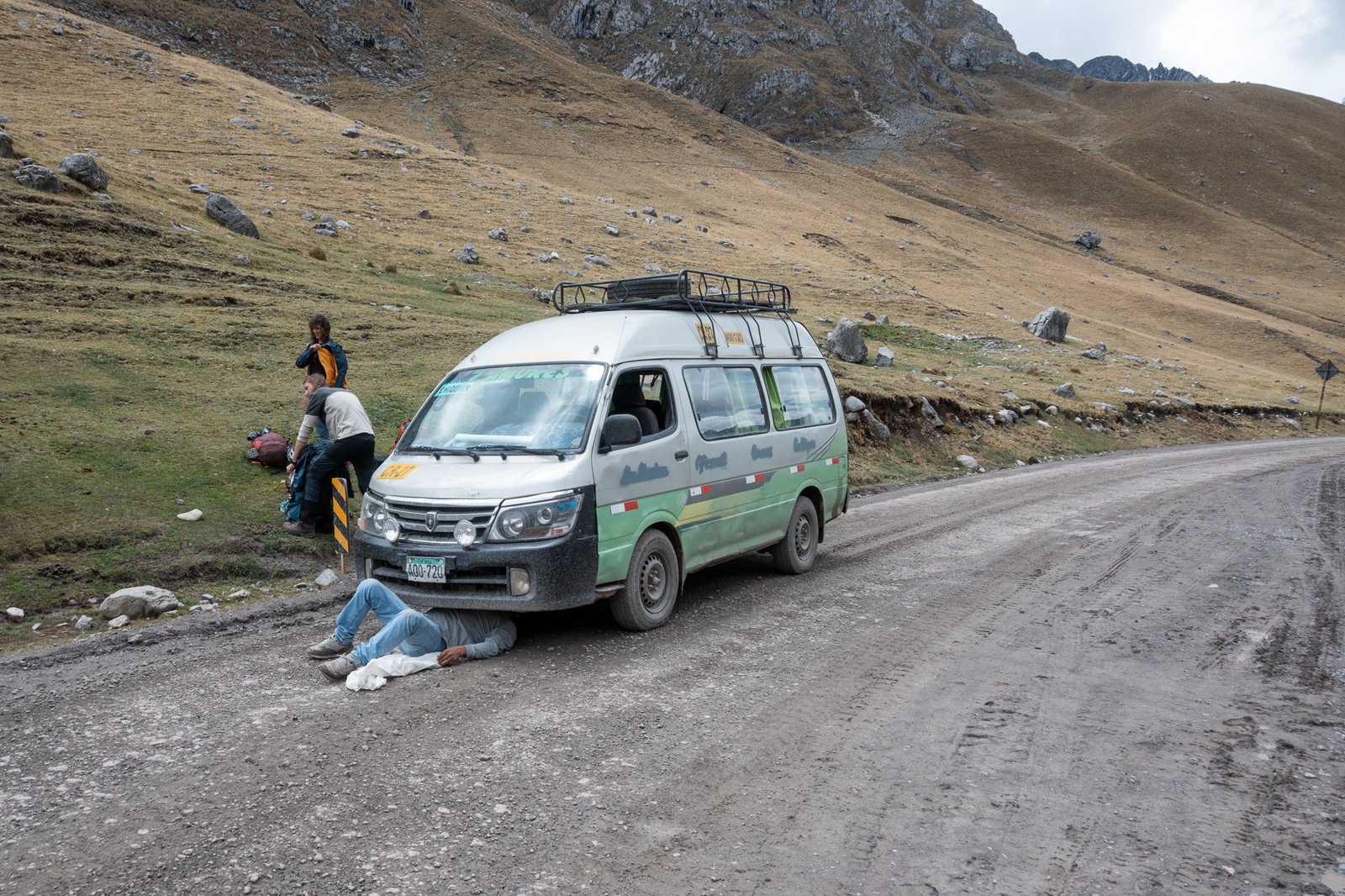
For the ride from Chiquián to the Huayhuash trail head (Cuartelhuain), it’s best to inform the owner of the hotel you’re staying at. In my case, there were two other people with this same idea, we left Chiquián around 8 am and the ride was a bit over three hours long.
The price of this ride depends on your negotiation skills, in our case we came to a deal of 70 soles per person, which felt a little high, but we just wanted to leave Chiquián and start the Huayhuash Trek.
Option 2: go to the trail head directly all the way from Huaraz
Getting to the Huayhuash Trek trail head this way (Cuartelhuain) you can really consider as well. The downside is that you’ll need to wake up very early in the morning, around 3-4 am.
I met some people who went to the trail head at Cuartelhuain this way. They contacted a few tour organizations, and asked if they had space left. They told me that they paid 120 soles per person.
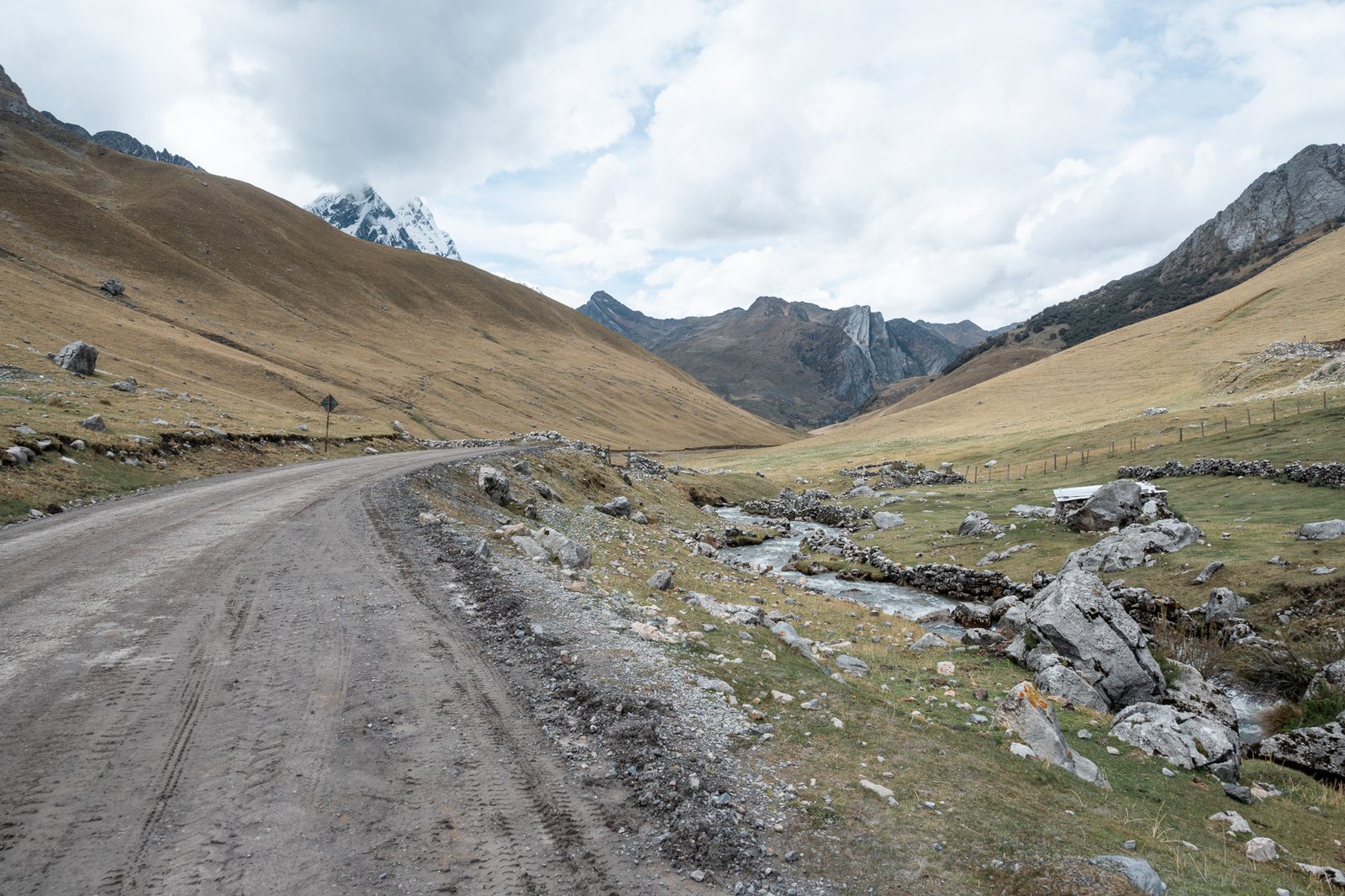
When looking on the map, the road from Chiquián to the trail head doesn’t look that long, but the road has many twists and it’s an unpaved dirt road going mostly uphill. From Huaraz, it’ll take five to six hours.
Renting and buying gear
Huaraz has quite a few outdoor shops where you can rent and buy gear. The ones I used (and heard good things about) are:
- Williams Outdoor: very positive experience. They rent at a slightly lower price compared to other stores I visited.
- Montañas Mágicas Outdoors Equipment: a small store in the center of Huaraz with a friendly owner. I bought a few things here. Needless to say it’s more expensive compared to buying gear in Lima, or big outdoor stores in Europe or America. But high quality and quite a lot.
- Duval Outdoors: sells high quality outdoor equipment.
- Andes Camping Mountain Shop: One of the bigger shops in Huaraz. Both rent and selling, but in my experience at a slightly higher price.
Good to know: if you’re in a big city like Lima or Cusco before Huaraz, it’s a good idea to buy the things you need there.
Huayhuash costs overview
| Ride Huaraz – Cuartelhuain | S/80-120 |
| Llamac entrance | S/50 |
| Access to trailhead Pocpa | S/30 |
| Communities payments | S/200 |
| Colectivo Llamac to Huaraz | S/40-60 |
| Total | 400 to 450 Soles (95 to 120 Euro) (110 to 140 USD) |
All of the costs above can only get paid in cash, so be sure to bring enough. The local communities you’ll pass and have to pay when hiking the Huayhuash Circuit play an important role in maintaining the trails, campgrounds, and safety.
Take some extra cash for unexpected expenses, meals, drinks, and transport at the end of the hike.
I had a lot of the gear with me, but if you have to rent gear the costs will be significantly higher.
Hiking the Huayhuash Trek solo, with a tour, or with a guide?
Are you looking for freedom, comfort, or sharing the experience with others?
Hiking the Huayhuash Trek solo gives you the most freedom and independence. You can choose your own pace, camp where you want, take longer breaks, and change your plans along the way.
There is something very fulfilling about completing the whole adventure solo. The downside is that you have to carry and plan everything by yourself, and won’t have help if something goes wrong.
Hiking the Huayhuash Trek with a tour is a very different experience. You don’t have to plan everything yourself, making the trek easier and more relaxed. You also don’t have to carry all the weight, giving you more energy to enjoy the landscapes.
The trade-off is less freedom. You have to follow the group’s pace and schedule. You cannot decide where to camp or how long to stay somewhere. The cost is also noticeably higher than hiking the Huayhuash Trek solo.
Hiking the Huayhuash Trek with a guide (or small group) sits somewhere in between. You still get a sense of adventure and independence, while having someone with experience to guide you. The downside is that it costs significantly more and gives you less flexibility than hiking solo.
To help you decide, ask yourself:
- Do I want the freedom to choose my own pace and camp where I want?
- Am I comfortable planning the route, campsites, logistics all by myself?
- What would feel more fulfilling: completing the trek completely by myself, or sharing the experience with others?
- How much am I willing to pay? Am I willing to pay more to make this trek more comfortable?
- Can, and do I want to carry all the weight?
- Would I feel comfortable knowing that someone is there to help if something goes wrong?
Where to stay when visiting Huaraz?
Hostels
- Krusty Hostel B&B the main place everyone knows about
- Yerupaja Mountain Hostel
- Caroline lodging
Hotels ($)
- Rajutuna Inn very affordable one-person rooms
- Huaraz Colonial
Hotels ($$$)
My favorite restaurants and cafés
- Cafe Andino best coffee I was able to find in Huaraz
- Illa Restaurant great price/quality
- Café de la Campesina
- Calima
- Pizza Mostra
- Trivio Resto Bar
HUAYHUASH TREK SOLO: ROUTE & ITINERARY
Route information
You have the following Huayhuash Trek options:
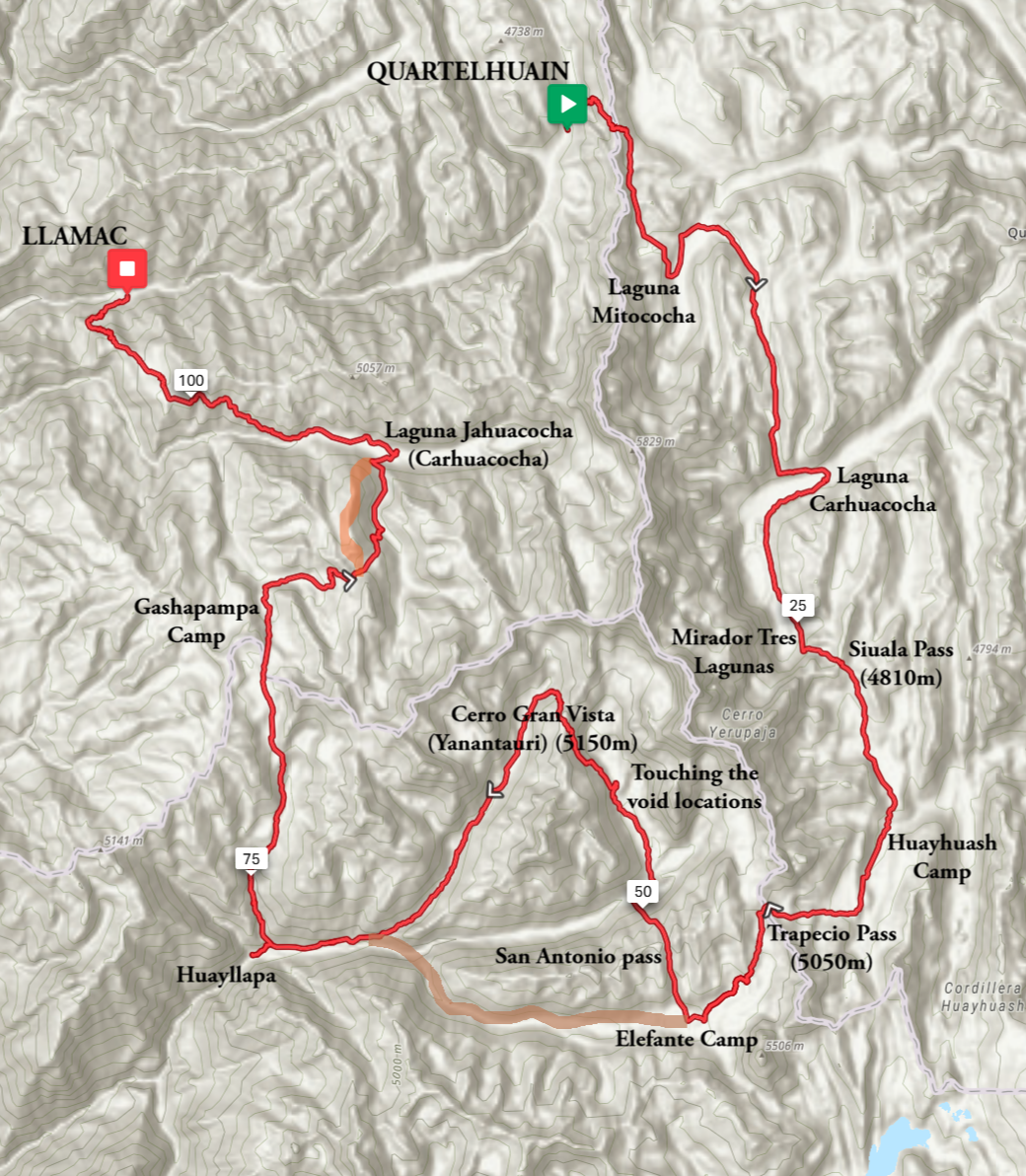
- Classic Huayhuash Circuit: Start at Cuartelhuain, finish in Llamac.
(105 km with 5800 meters elevation gain, 7-12 days) - Huayhuash O-circuit: Start at Cuartelhuain, finish at Llamac. Less altitude gain because you’ll skip the San Antonio pass, Cerro Gran Vista, and Touching the Void locations.
(100 km with 5100 meters elevation gain, 6-10 days) - Huayhuash Mini Trek (point-to-point): Start at Cuartelhuain and finish in Huayllapa.
(67 km and 3300 meters elevation gain, 4-6 days)
Interested in the GPX? Just leave a comment below, or follow me on Instagram and send me a message. Happy to help with any Huayhuash questions as well.
Huayhuash Trek: Camping and wild camping
During the Huayhuash Trek you’ll pass nine communities and you need to pay a small fee at each, whether staying at their campsite or just passing through.
At each community, you’ll receive a ticket with the name and date. Keep them with you as proof of payment. They’re nice souvenirs as well.
The total fees when I did the Huayhuash Circuit (October 2025) were 280 Soles or €72, although prices might have increased, so bring a little extra.
Huayhuash Trek Solo: Wild camping
Wild camping is allowed during your Huayhuash adventure. Though, you still have to pay the nine communities when passing through (you can use the facilities). I think wild camping really adds to the adventure and gives you an extra unique Huayhuash experience.
Nevertheless, some of the communities are located at incredible locations, such as Laguna Mitococha and Laguna Jahuacocha, so it’s worth considering to stay at those. In addition, camping at the communities offers a nice occasion to meet other hikers.
Huayhuash Trek: My solo adventure, the struggles and highlights
HUAYHUASH: Preparation
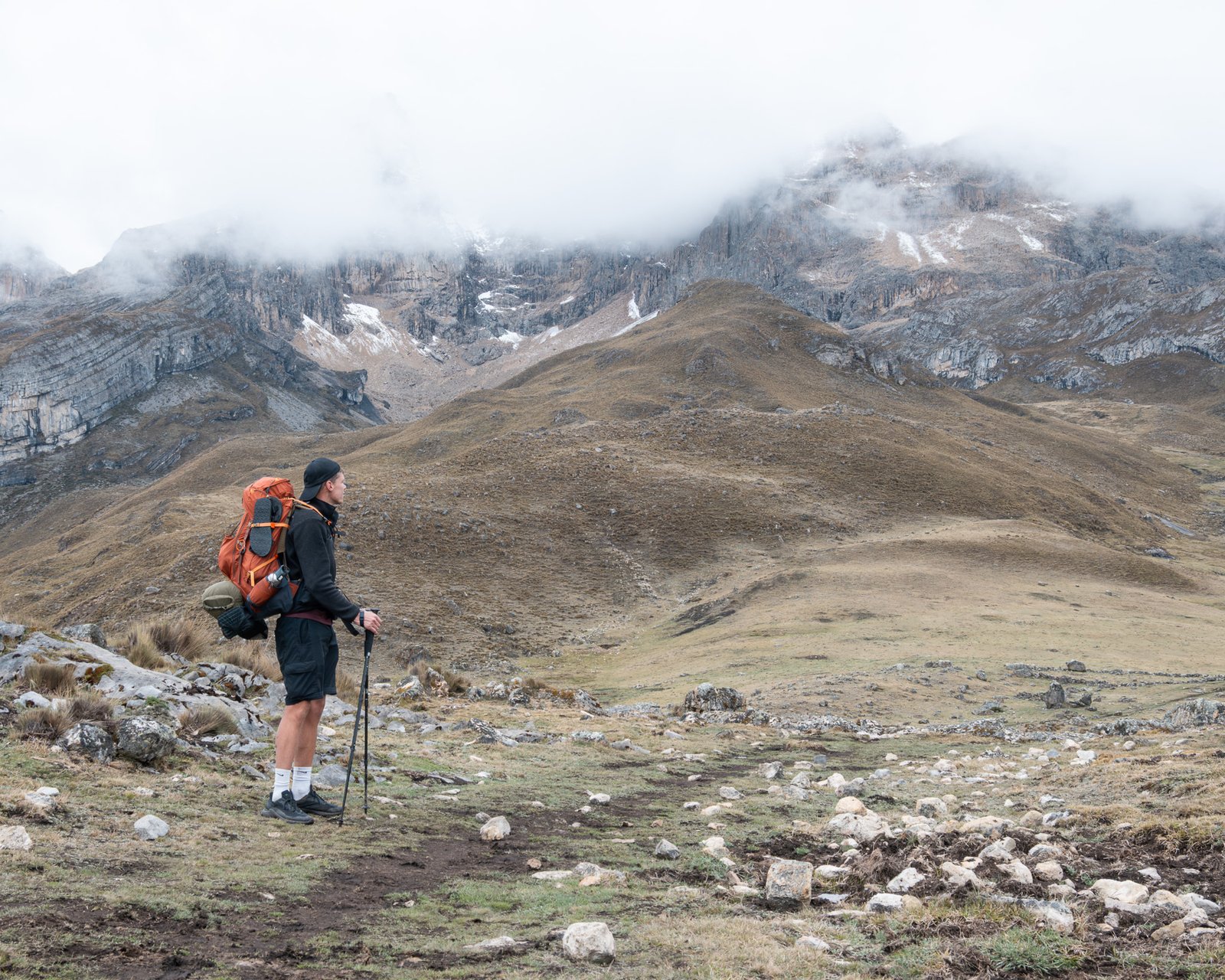
I first discovered the Huayhuash Trek while scrolling through Instagram. A popular hiker had shared a few incredible pictures from the trail. He went on a guided trek with four other hikers. Seeing that landscape was like love at first sight, it immediately jumped to the top of my bucket list. But on my own terms, completely solo.
I’d already done plenty of solo adventures, but I knew the Huayhuash was going to be the craziest one yet. And to be honest, I could feel the nerves building as I got closer to starting this solo adventure.
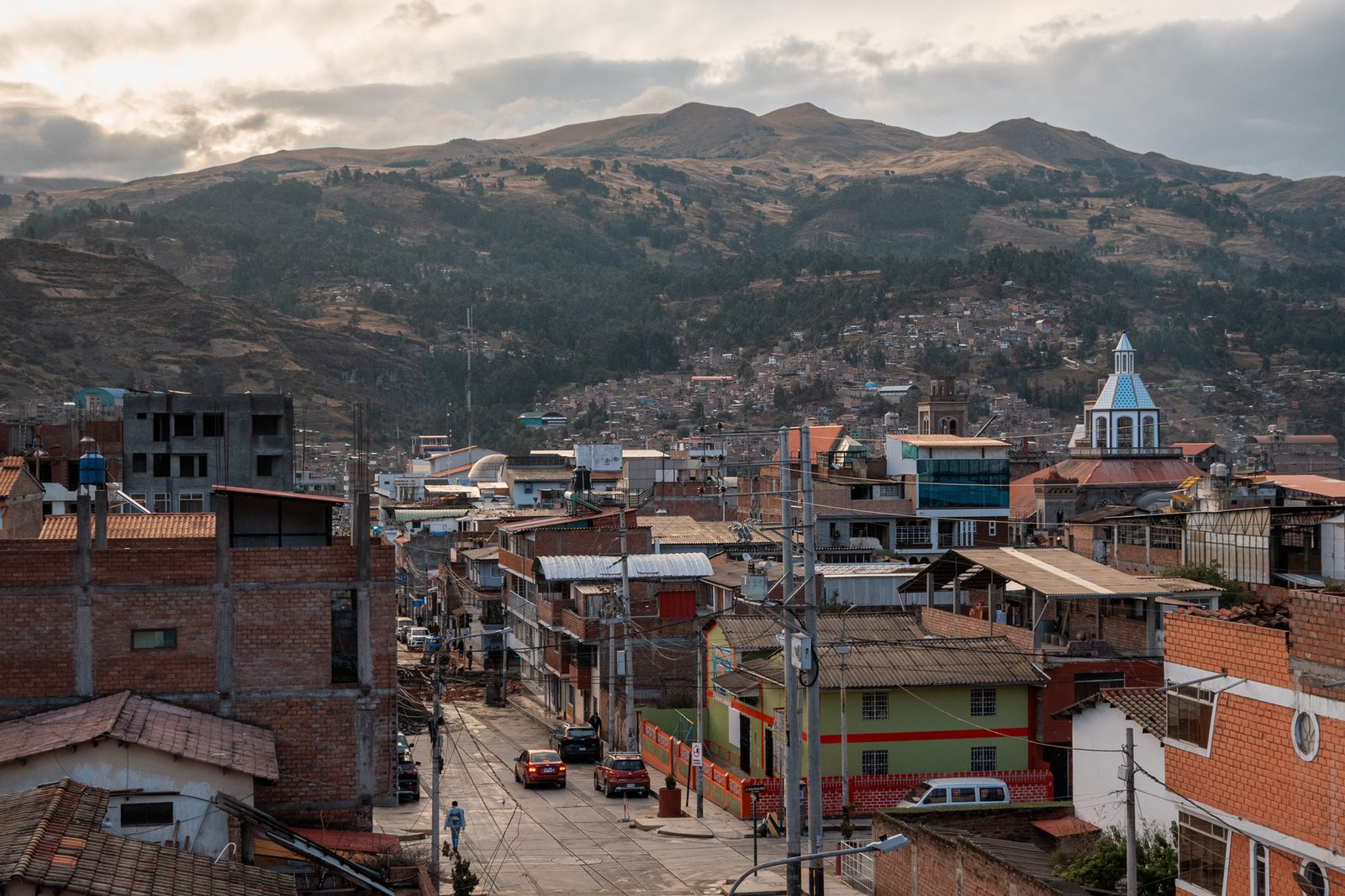
When traveling solo, my social energy tends to come in waves (something I know a lot of solo travelers experience). The days in Huaraz, before starting, I found myself turning inward. Instead of hanging out and meeting others, I felt a need for space to prepare for the isolation ahead.
I used this quiet time to focus on preparation. I did a few acclimatization hikes near Huaraz, bought groceries, created a detailed meal plan, and rented a few things I still needed for the trek.
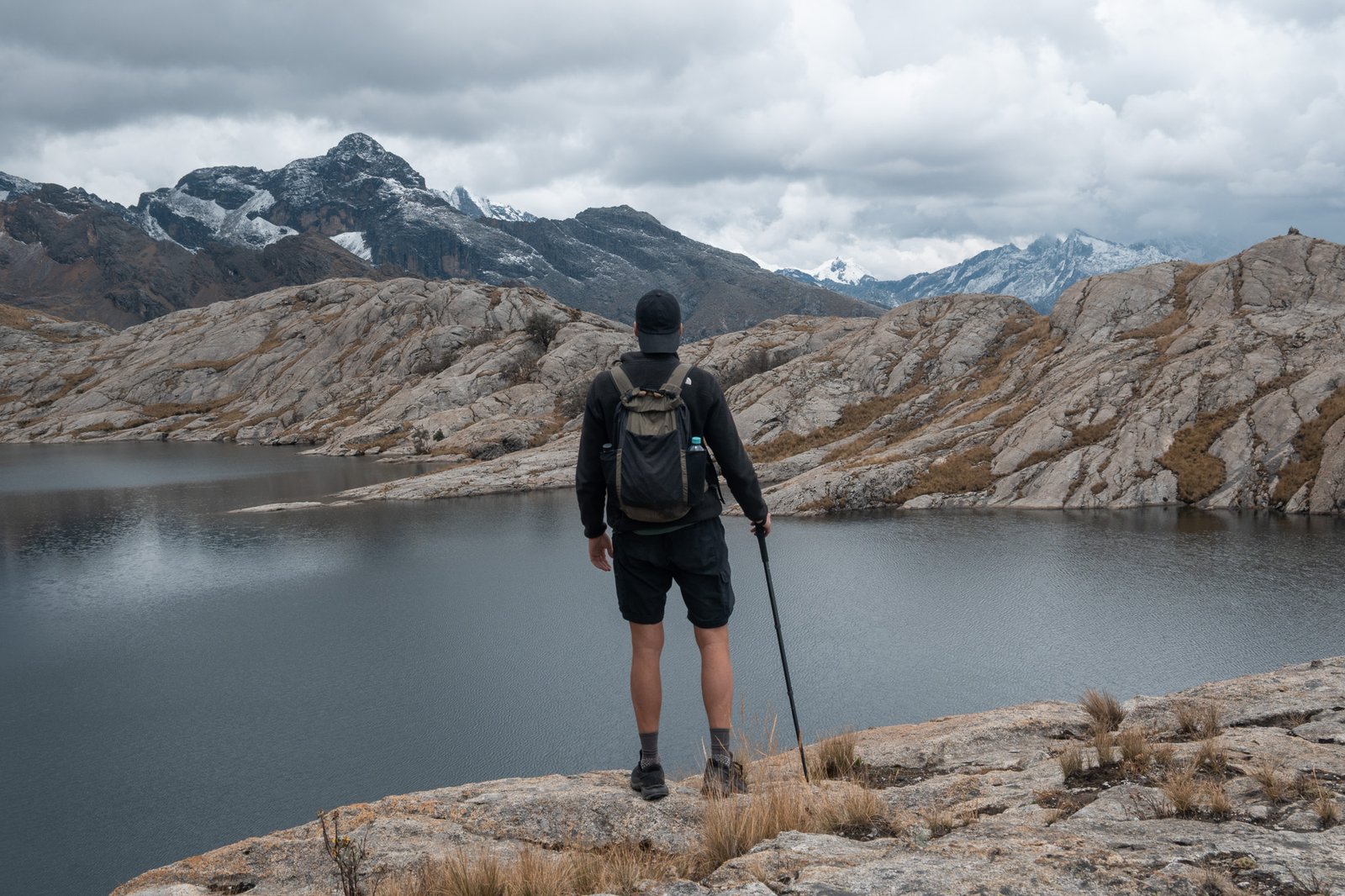
DAY 1: Chiquián – Laguna Mitococha
The night in Chiquián was cold, but when waking up at Hotel Los Nogales, I felt good. I took a warm shower, knowing that that would be the last one for a long time and felt ready for what was ahead. At breakfast, I met a couple from France who were also going to do the Huayhuash, we shared the colectivo to the trail head.
The colectivo ride was an adventure in itself, after a few kilometers the road turned very bad, twisting at the mountain roads with incredible views. It was very promising.
After a longer than expected ride, I arrived at the trail head. My backpack at the start of the hike felt incredibly heavy, it was easily over 22 kg because of all the food. The Huayhuash Trek offered zero mercy to wake up the legs, it started with a steep climb right from the beginning.
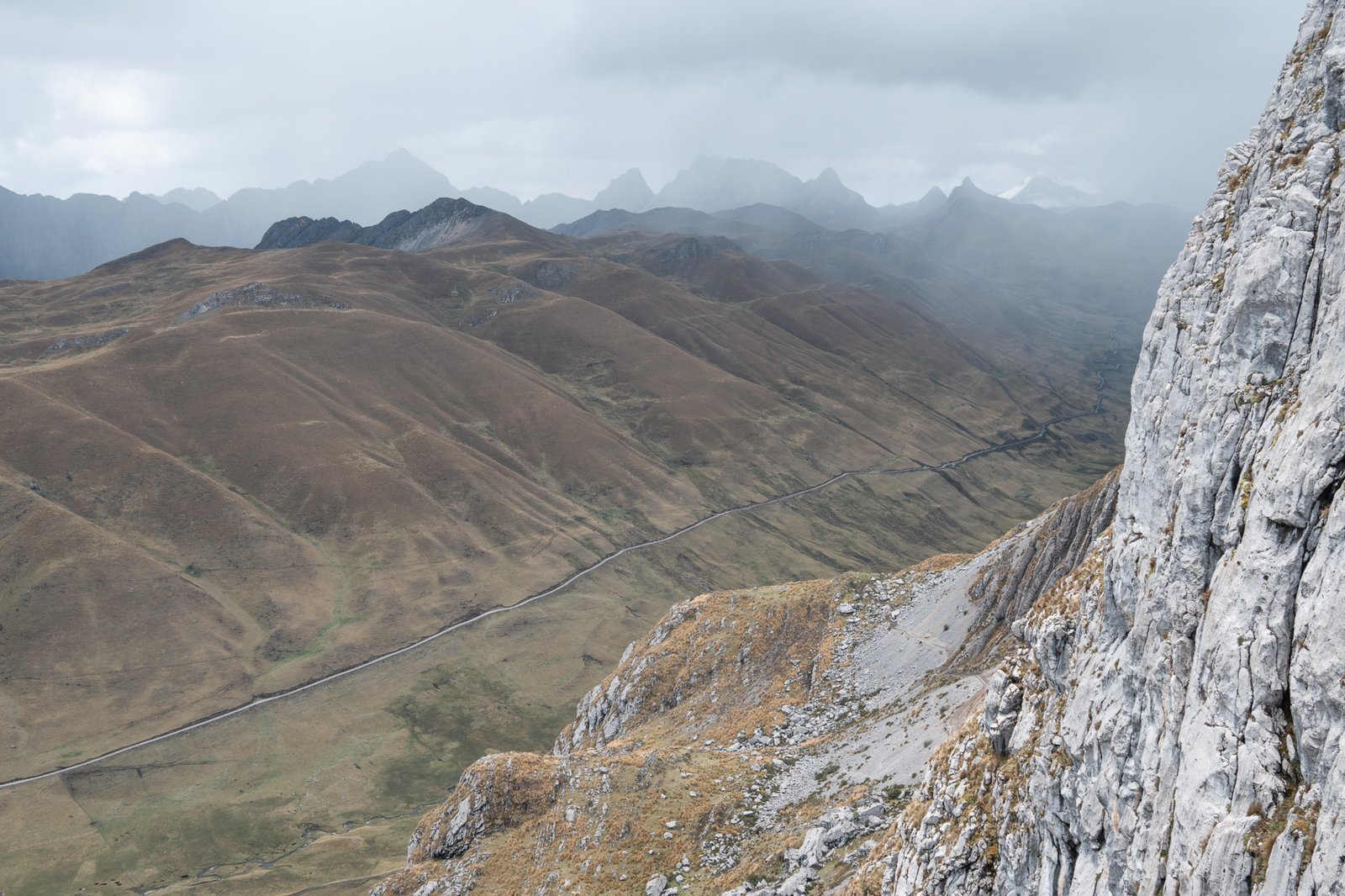
After a while, it started hailing and snowing. I realized the gloves I bought in Huaraz weren’t waterproof. My hands were soaked, and I felt cold. Luckily, my waterproof jacket and trousers did their job. Still, the hail was so intense that it slipped right past my hood and down my neck.
Near Laguna Mitococha, I came across a heartbreaking sight. This adult cow got stuck in the middle of the ice-cold river. A few other cows stood around her, helplessly watching. It seemed to have happened recently, but the poor cow showed no sign of life. Looking at that poor, lifeless cow brought tears to my eyes. It was a reminder of how harsh this environment is.
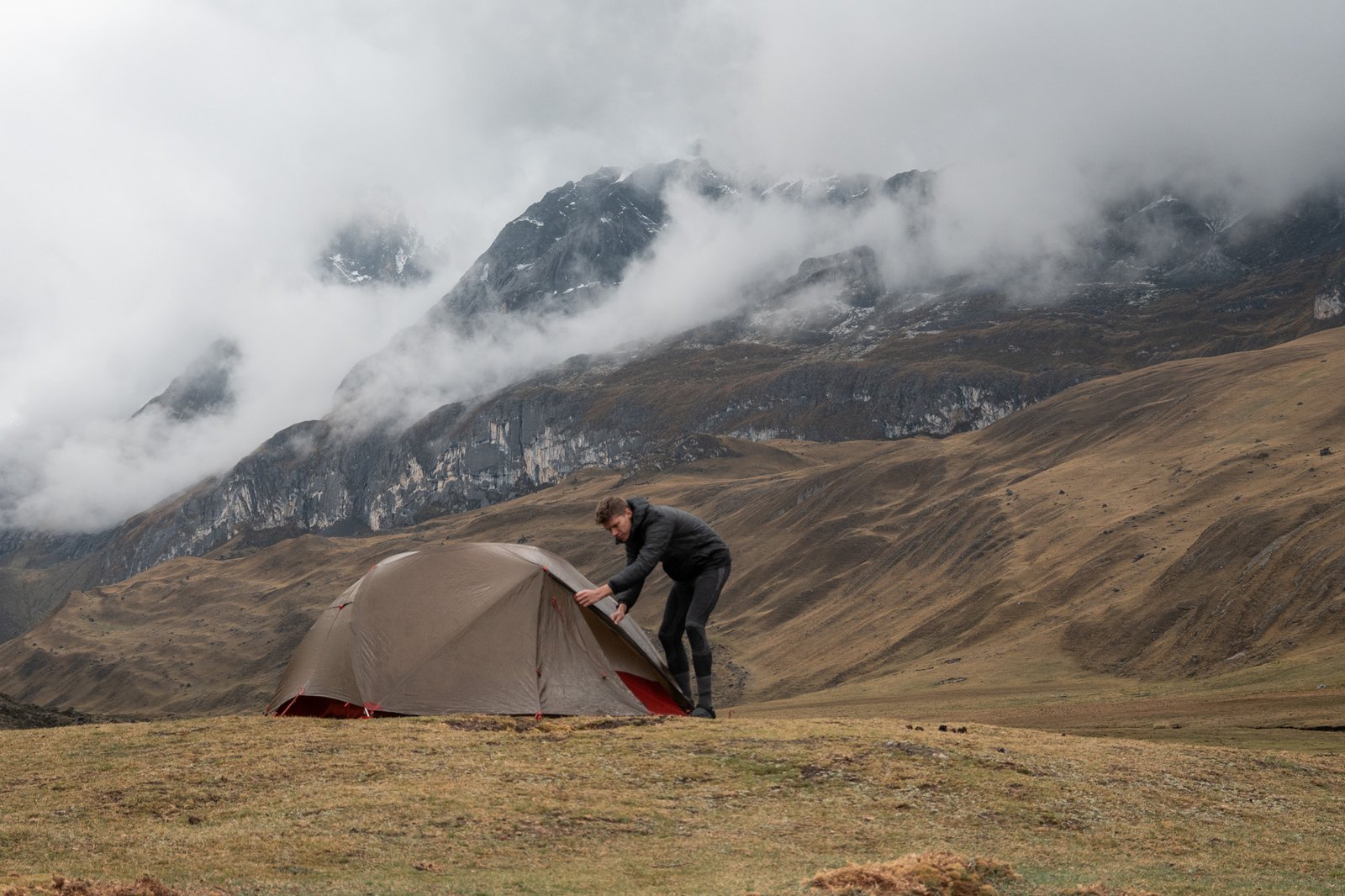
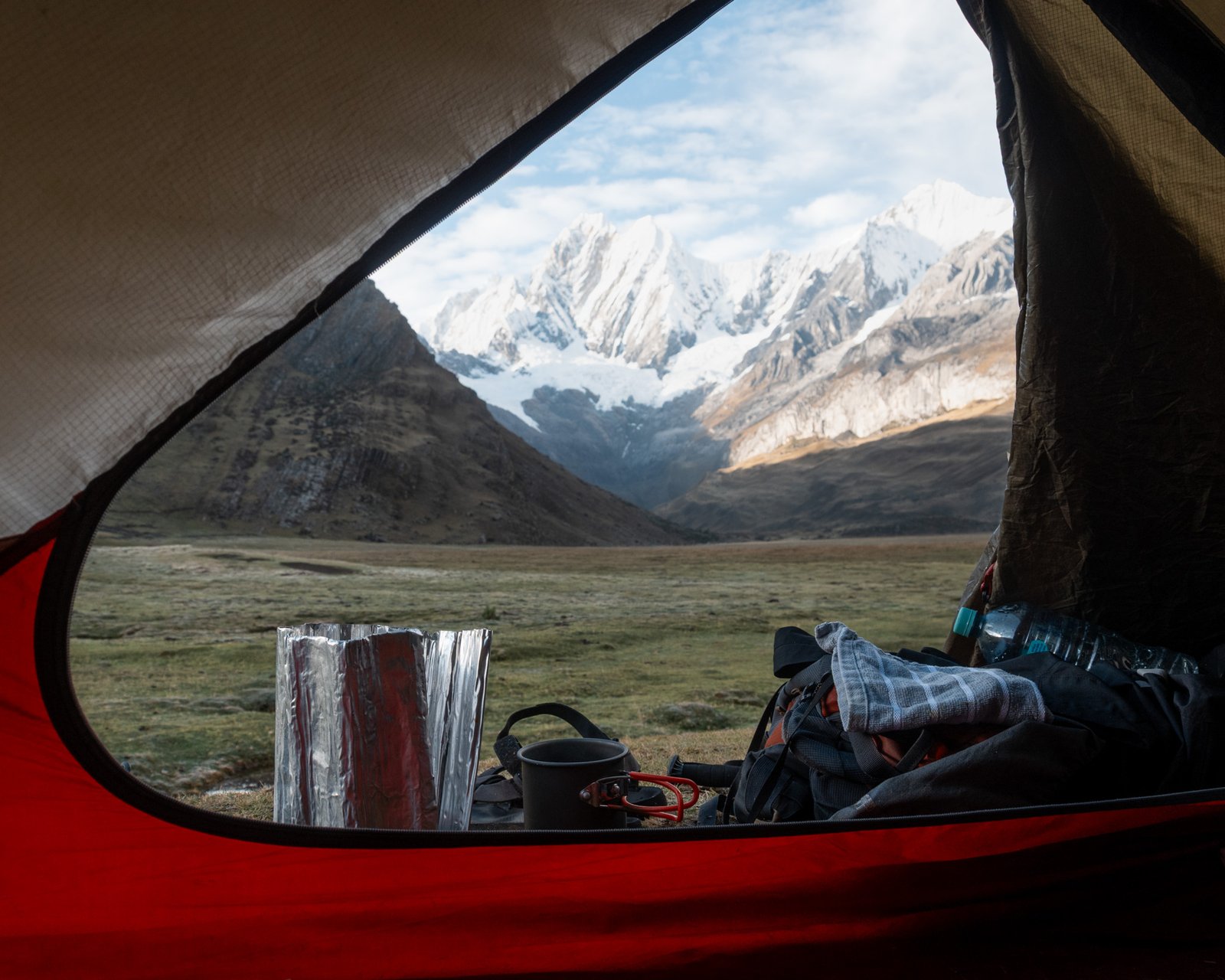
The highlight came at the end of the day. After setting up my tent feeling cold, exhausted, but satisfied, I cooked my meal. Sitting there alone, with warm food in my hands, it suddenly hit me where I was and the wild adventure I had officially started.
DAY 2: Laguna Mitococha – Tres Lagunas
Even though I was well prepared, I woke up around 4 a.m. feeling cold, and it was quite difficult to fall asleep again.
Yesterday at the first mountain pass, I crossed paths with an Australian couple. I ran into them again today, and when they mentioned how nice it was being able to share body heat in their tent at night, I felt a flash of envy. Solo on the Huayhuash Trek, the cold nights are all yours.
I ran into the man from the community who collects the fee. I told him about the poor cow from the day before. He was visibly sad to hear the news.
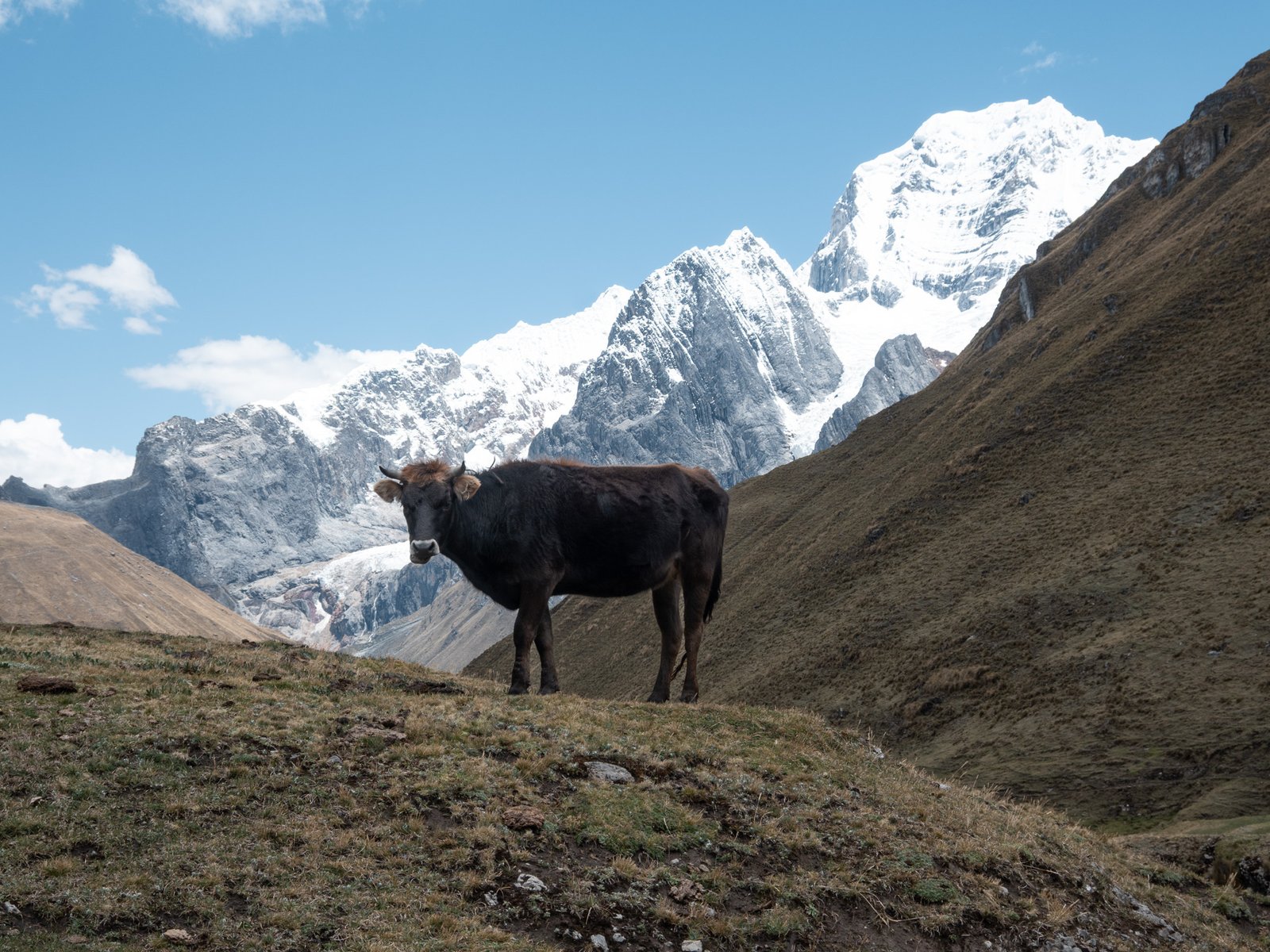
At lunch I felt like the luckiest person alive, the views were unbelievable. I remember feeling good, the backpack was a little lighter than yesterday, and the weight will get less and less as the days progress.
At the long downhill to Laguna Carhuacocha my right knee started to hurt, and I began to worry about it. Luckily, it felt fine on the flat and uphill parts.
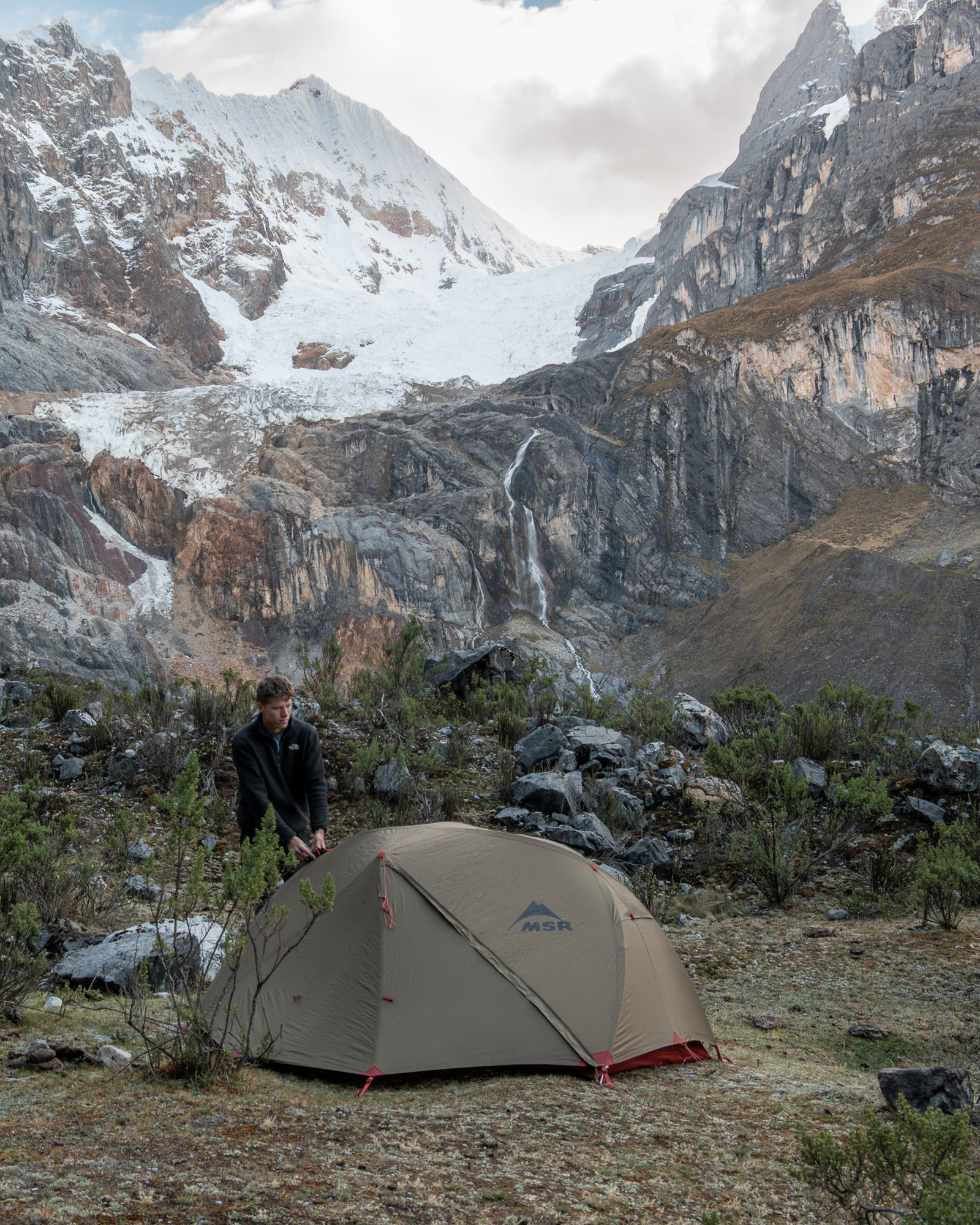
Then, at the end of the day near Tres Lagunas I ran into the French couple again with whom I shared the colectivo. We hiked together for a while, but when we reached Tres Lagunas, I spotted a perfect wild camping spot near a river, right next to the lakes and sheltered from the wind. I decided to call it a day there, while the French couple continued uphill toward Siula Pass.
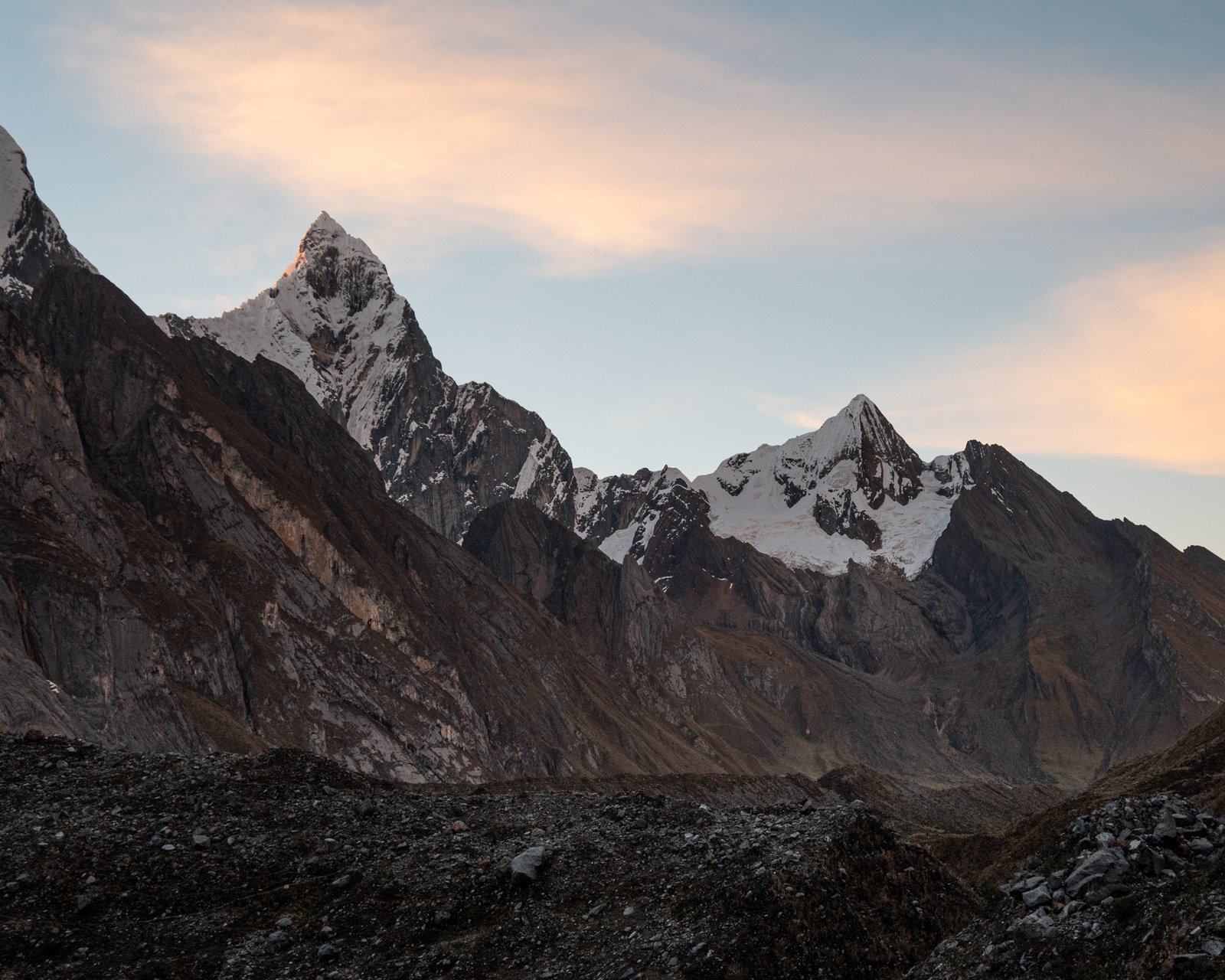
Man, that camp spot, I have no words for it. Absolutely incredible. I decided to eat dinner down by the lake and watched the sky turn beautiful shades of pink and yellow. Every now and then, huge chunks of ice fell from the glacier with loud bangs. Unforgettable.
DAY 3: Tres Lagunas – Somewhere near Huayhuash camp
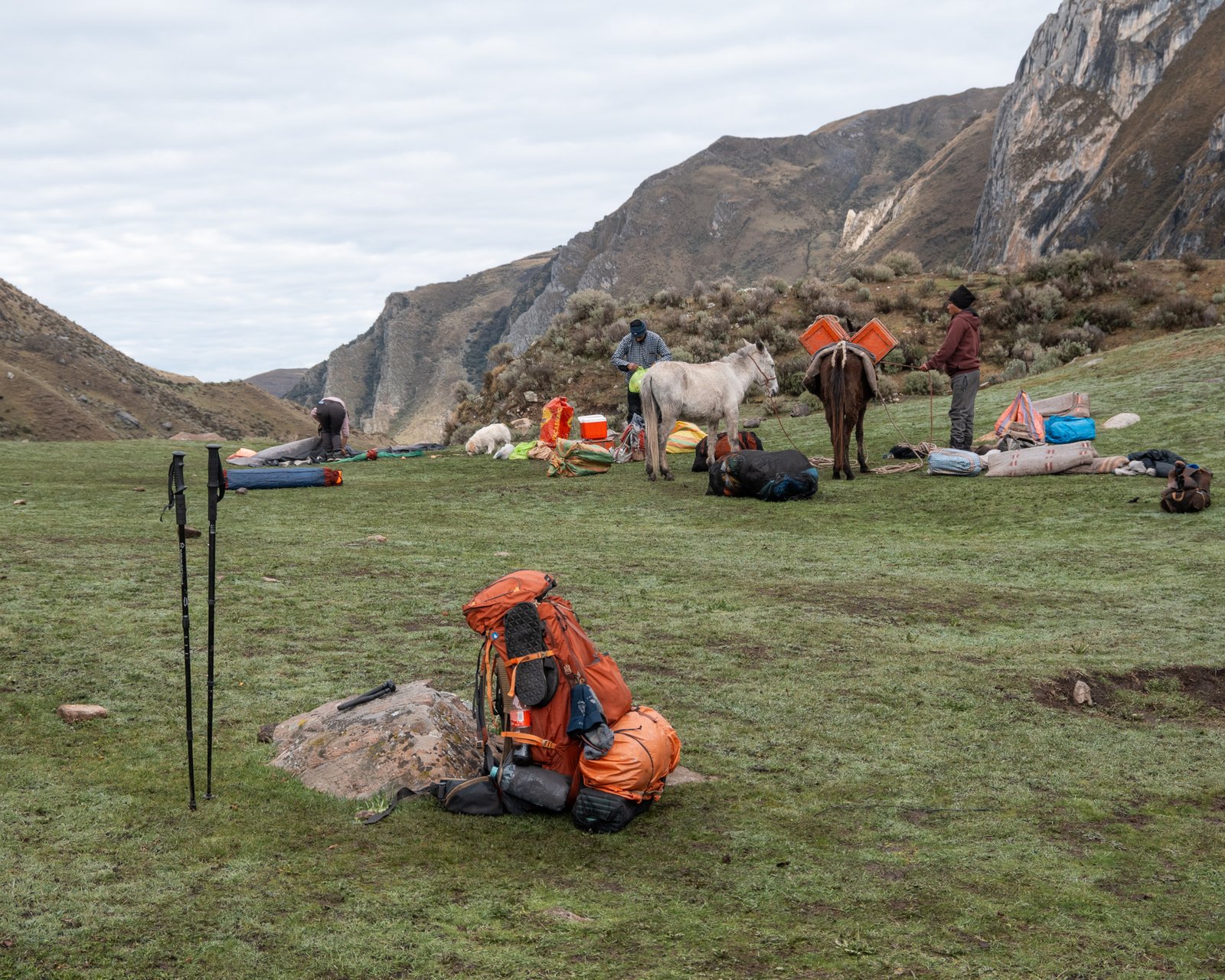
I slept much better than the night before since it was less cold, probably because I was at a lower altitude and it was less windy. A group on a guided tour passed my tent, and we had a quick chat. They didn’t have to carry a 20+ kilogram backpacks, pack horses carried all their gear.
But watching them move as a group made me realize what that comfort actually costs. They paid far more than me, were locked into someone else’s schedule, and couldn’t just pitch a tent wherever their eyes caught a breathtaking view. Carrying every single gram on your back buys you the luxury of absolute freedom.
The day started with the steep Siula Pass (4810 m). I intentionally didn’t fill my water bottles to stay light for the climb, but I ended up regretting that decision because there was no way of getting water for a long time.
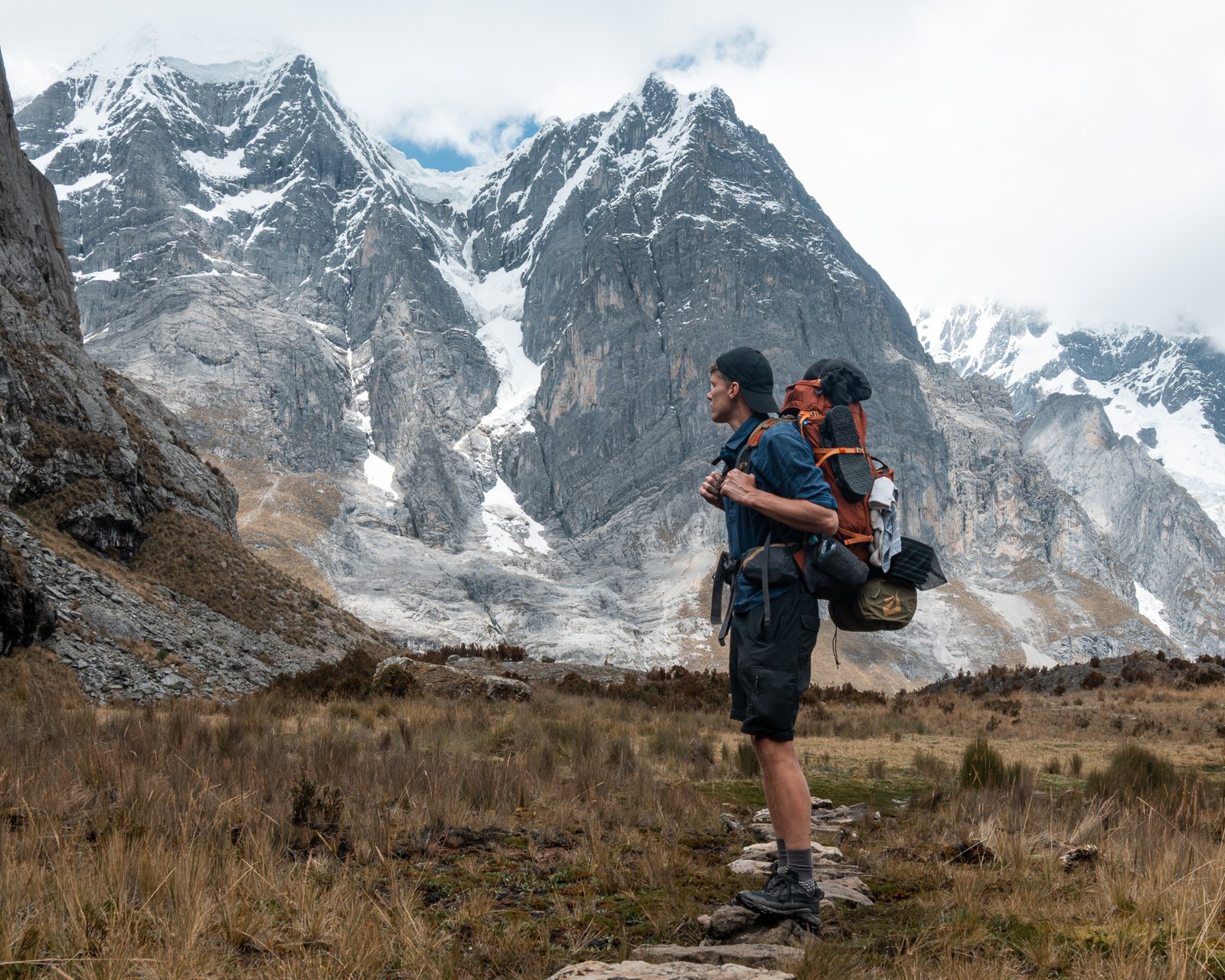
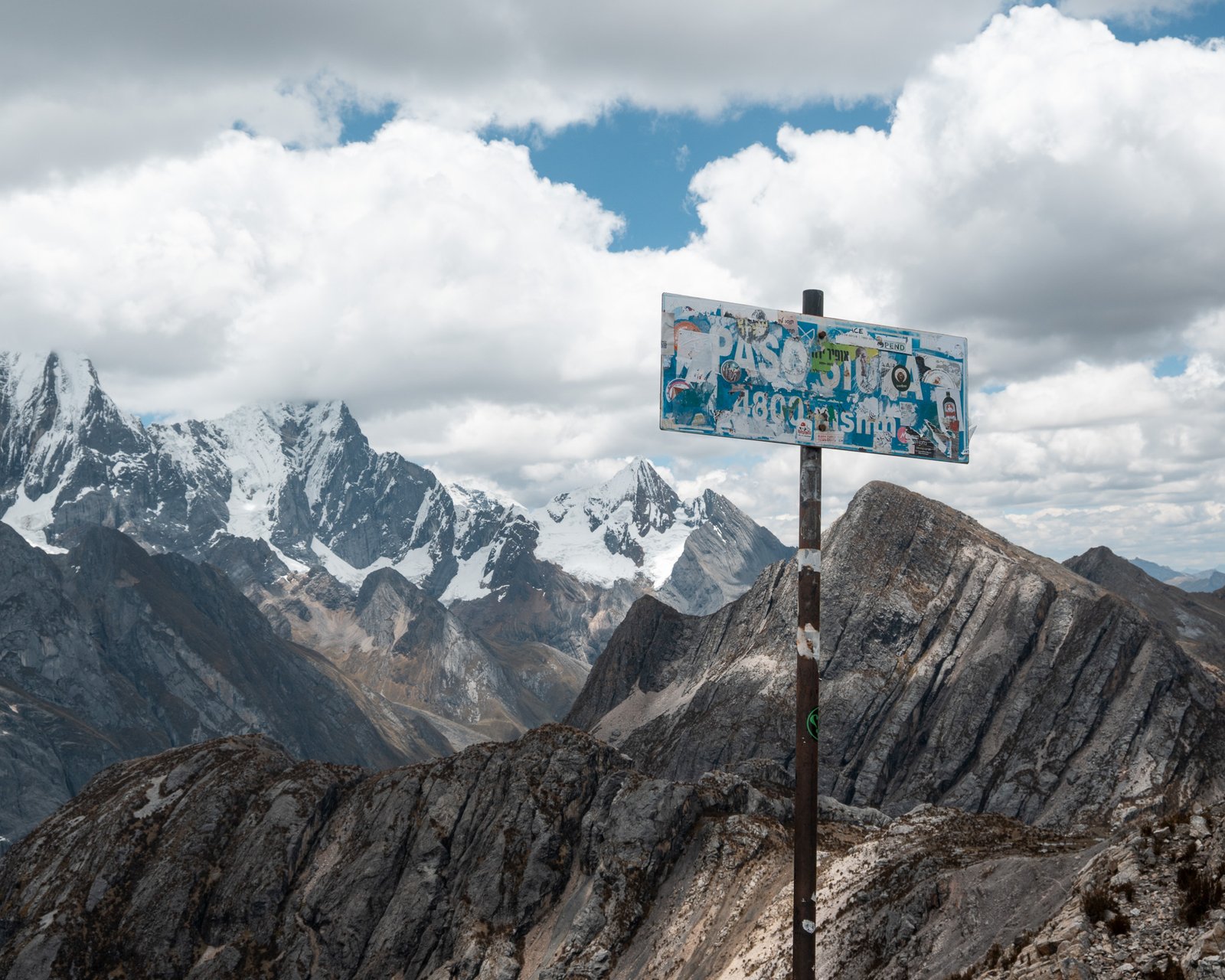
By the time I reached a river after a long downhill, I chugged two 750 ml bottles. It was also the perfect opportunity for an icy river shower. They say cold water triggers the nervous system, releases dopamine, and boosts energy and that’s exactly what happened. I felt like a new person.
Since I was a new person with refreshed energy, I kept going and going. I passed the group tour at the Huayhuash Community who I met earlier today, and made my way towards the Trapecio pass, which is one of the highlights of the Huayhuash Trek.
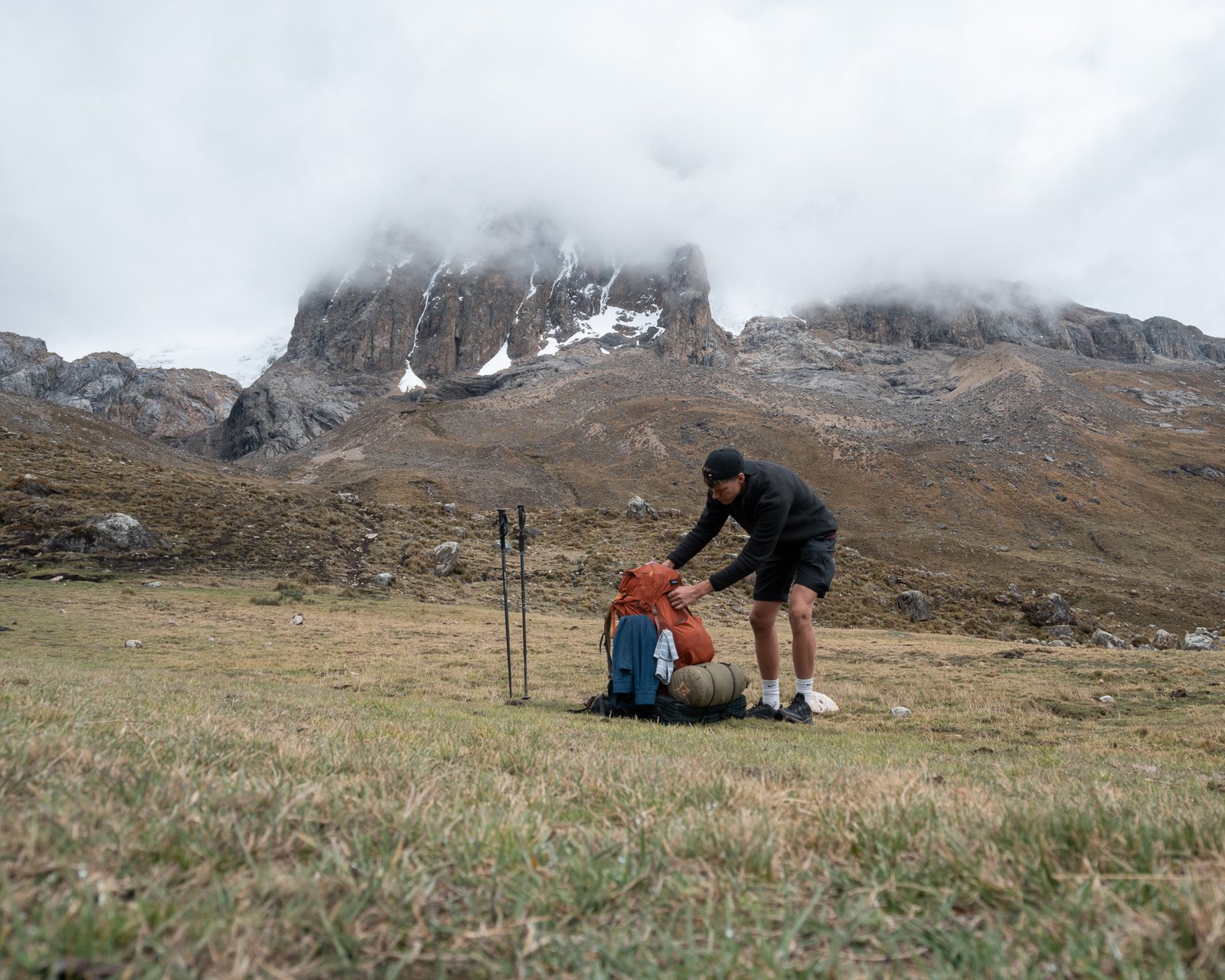
Just like the first two days, it started raining later in the afternoon, but this time with loud thunder as well. Instead of feeling miserable or scared, I loved it. Sheltered here all alone in the middle of these incredible mountains, with a warm meal, relying entirely on myself, was a great feeling. It’s an experience I think every adventurer or outdoor lover should experience at least once.
DAY 4: A rough day
In the morning, I felt full of energy knowing today was the day I’d climb the Trapecio Pass. I had seen beautiful pictures of this spot during my trip planning.
While eating breakfast about thirty curious cows completely surrounded my camp, watching every bite I took. The day started with mist and clouds, but around 10 am it opened up showing incredible views.
I was very happy with how my meal setup was working. Full of energy, I climbed the Trapecio Pass (5050 m) with hardly any fatigue.
But that summit gave me a false sense of invincibility. Feeling high on energy levels, I added an extra pass, the San Antonio pass. And tackling two high passes in one day turned out to be a mistake.
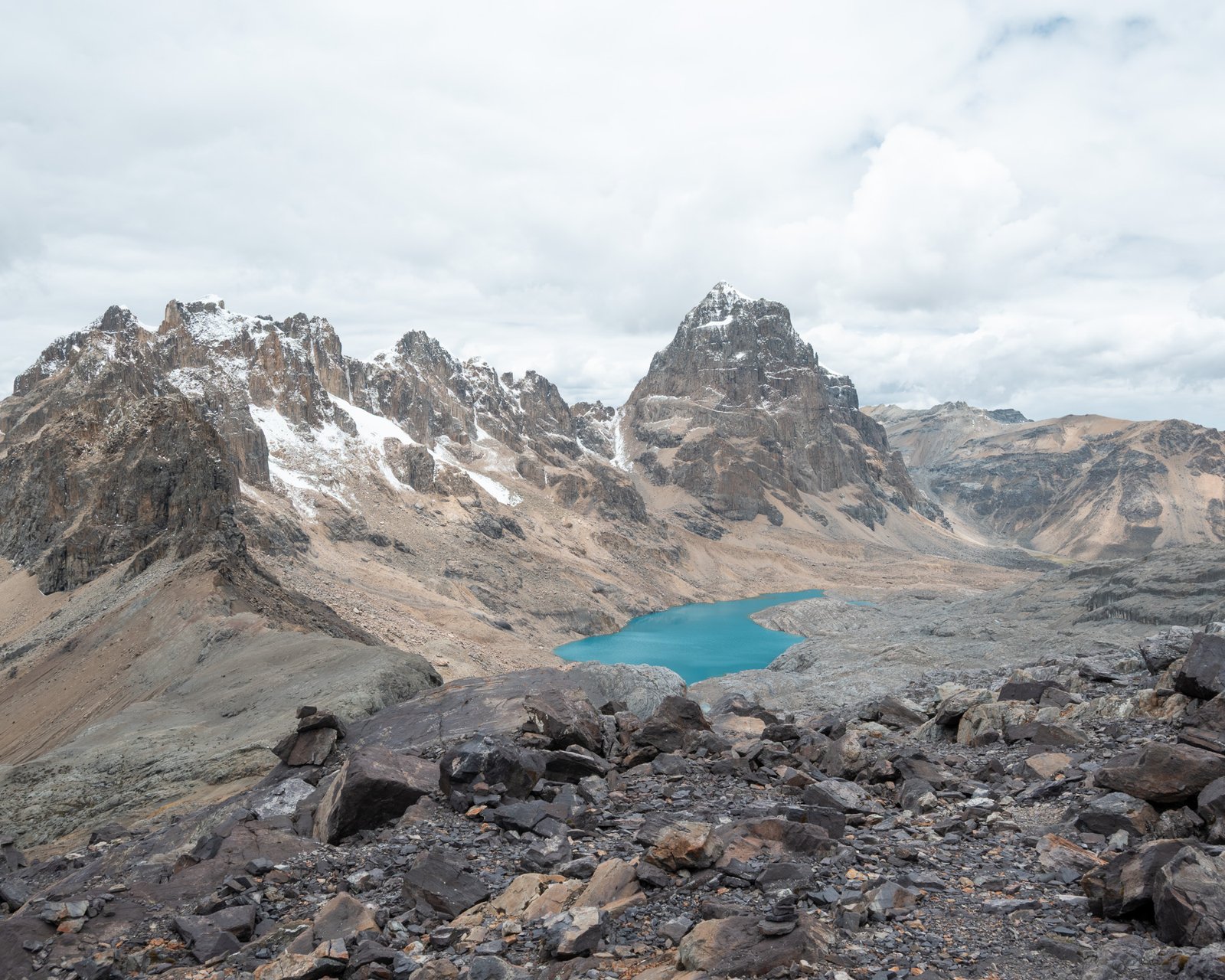
When the Mountains Humble You
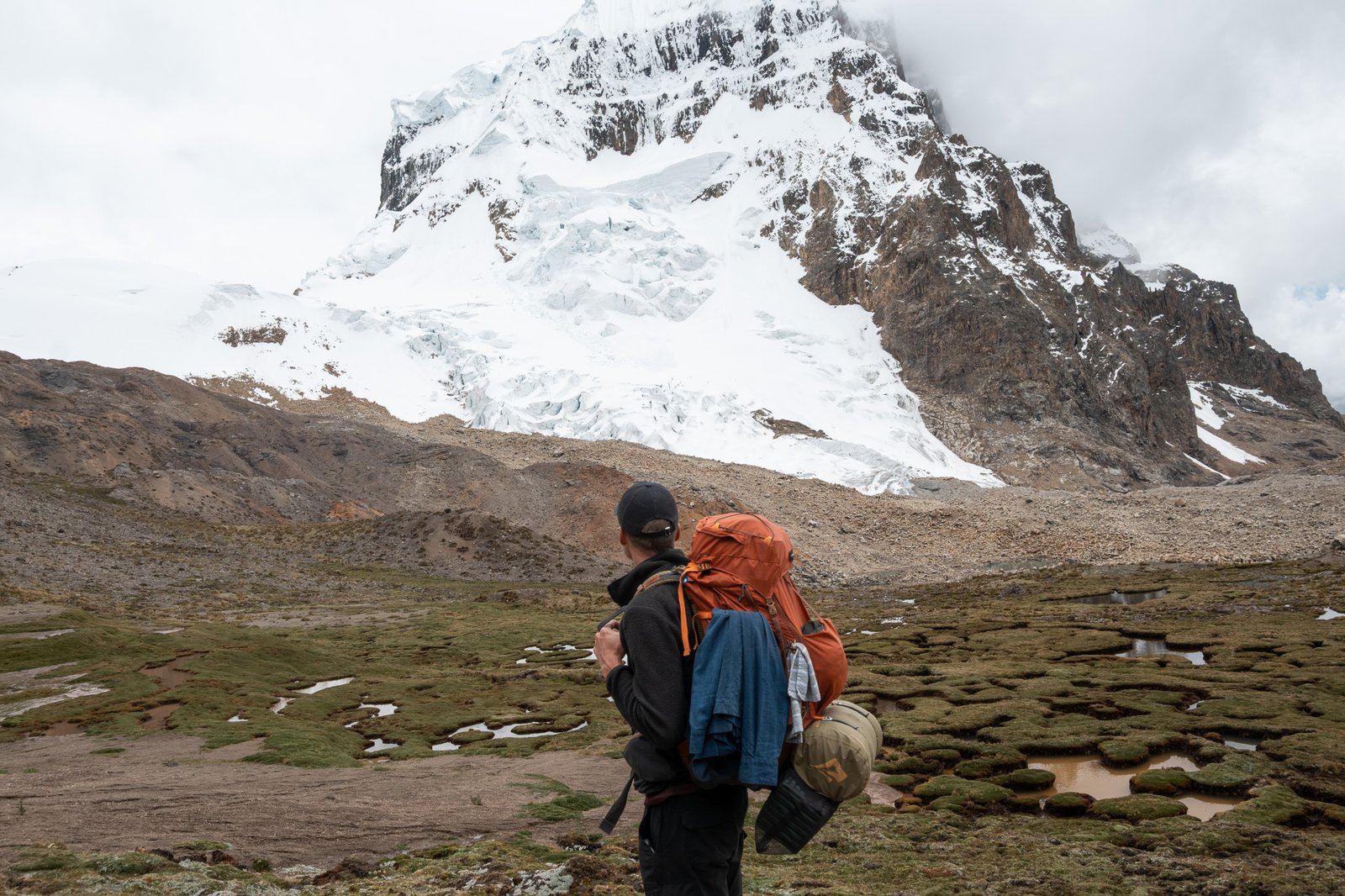
While climbing the San Antonio pass, things went well, but without any warning a big storm settled in. The trail became muddy and slippery, and my shoes got incredibly heavy from all the sticking mud. I reached the San Antonio summit around 4:30 PM, and still had to make my way all the way down to the valley to pitch my tent.
So I went fast, skiing down the loose little stones, but I reached a point where going down further simply wasn’t possible. It was a steep slope, probably an old waterfall, with a drop of about 30 meters. By that time it was around 5 PM, and darkness settled in at 6 PM. I checked my GPS, and realized I was far away from the right path, I had to make my way up again, and find the right path.
While climbing up it started hailing again, I was low on energy and had a few close calls of falling. My walking stick got stuck and bent between two rocks. It was getting darker and darker, and I still had a very long way to go to reach the valley. By then it was around 5:30 PM.
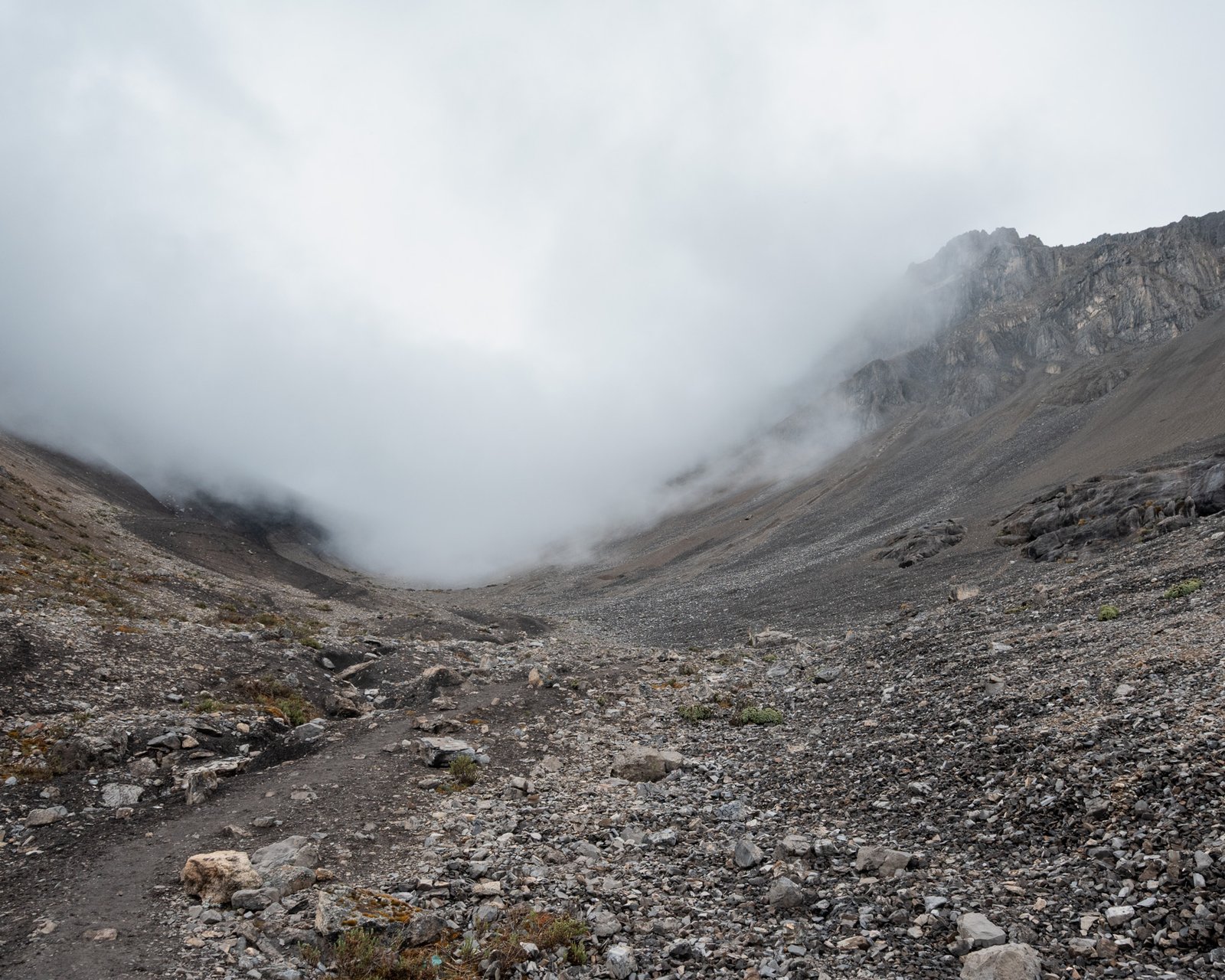
I wasn’t able to find the right path because of the hail which covered everything white. I had no choice but to go down and hope for the best. After a while I reached a steep slope again, here I decided to throw my backpack down 4 meters, and climb down by myself without carrying the backpack, since it’s harder to balance. Honestly, things could have gone wrong here.
By then it was past 6 PM, and I’m using my headlamp. It’s scary to have no idea of what comes next. I wasn’t on the right trail and it got very dark. Luckily, there were these sort of animal trails that zigzag downwards. Exhausted I made my way down, grabbing the plants to not slip and fall.
Around 7 PM I reached the valley, it was pitch black by then. I felt very grateful that I made it down safely without injuries, or something worse. The mountains showed me mercy.
Lesson: feeling I had plenty left in the tank, I impulsively added an extra pass, But the mountains have a way of humbling you the moment you think you’re invincible, so stick to your planned daily distance.
DAY 5: San Antonio valley – Yanantauri valley
I slept incredibly well that night, with over ten hours of deep, heavy sleep. My clothes from the day before were still soaked and dirty. Waking up, I realized how lucky I was the day before. It was a good lesson in humility, and I made a rule for the rest of the trek: maximum one pass per day, no exceptions.
I remember feeling hyped, because today I’d be passing the *Touching the Void places. It’s an incredible real-life story, which was turned into a bestselling book and a classic film.
*Touching The Void is the legendary story of two climbers on Siula Grande in 1985. After a broken leg and a cut rope dropped one of them into a deep crevasse, he crawled across the glacier back to camp after being left for dead.
Just walking there through the valley and imagining the story unfold right in front of me, was an incredible experience. A powerful reminder of what the human spirit can endure.
Next up was the climb of Cerro Gran Vista (Yanantauri) to 5150 meters, making it the highest point of the Huayhuash Trek. I kept climbing and climbing, but the summit didn’t seem to get remotely closer. At over 5000 meters altitude, every step required a lot of power.
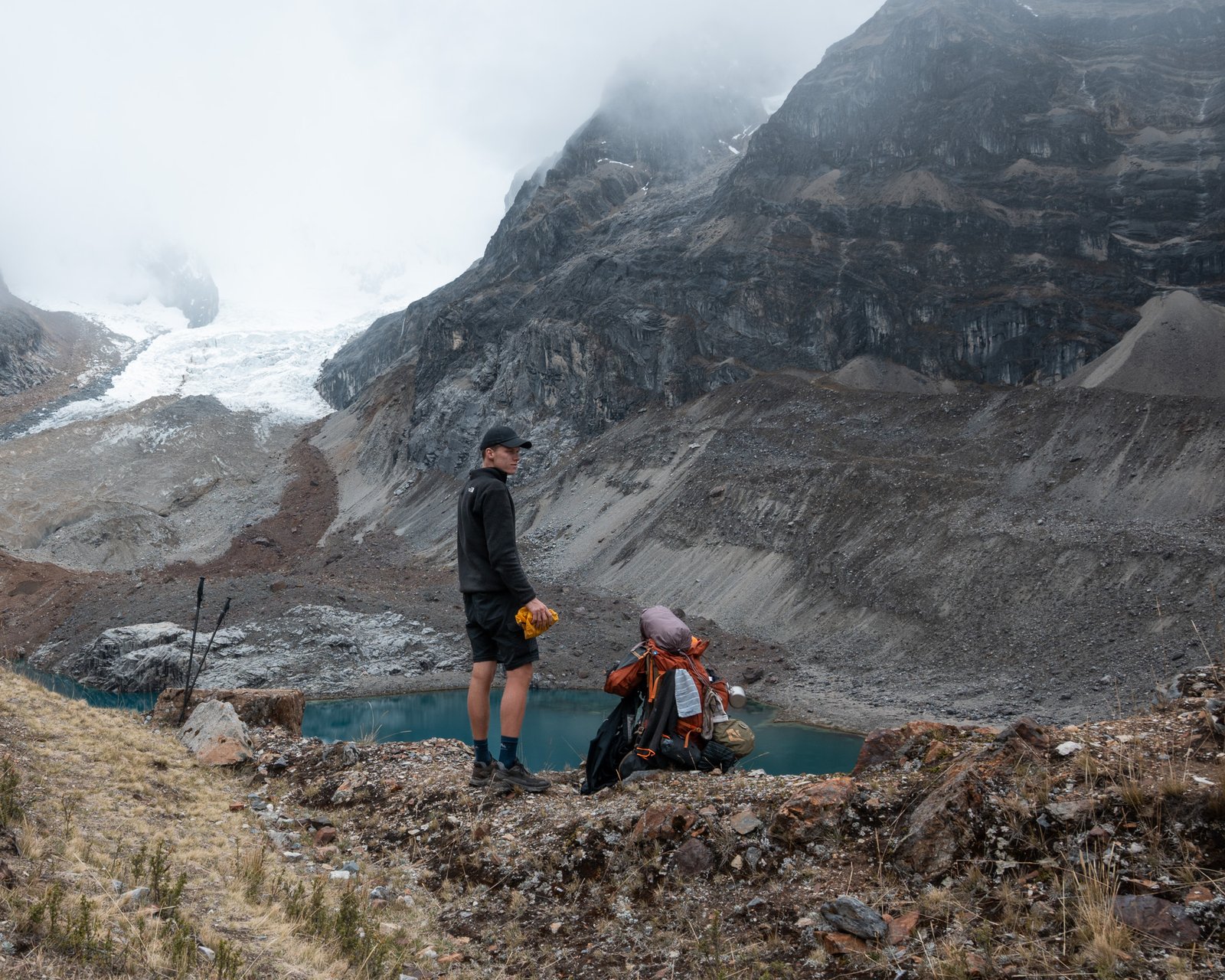
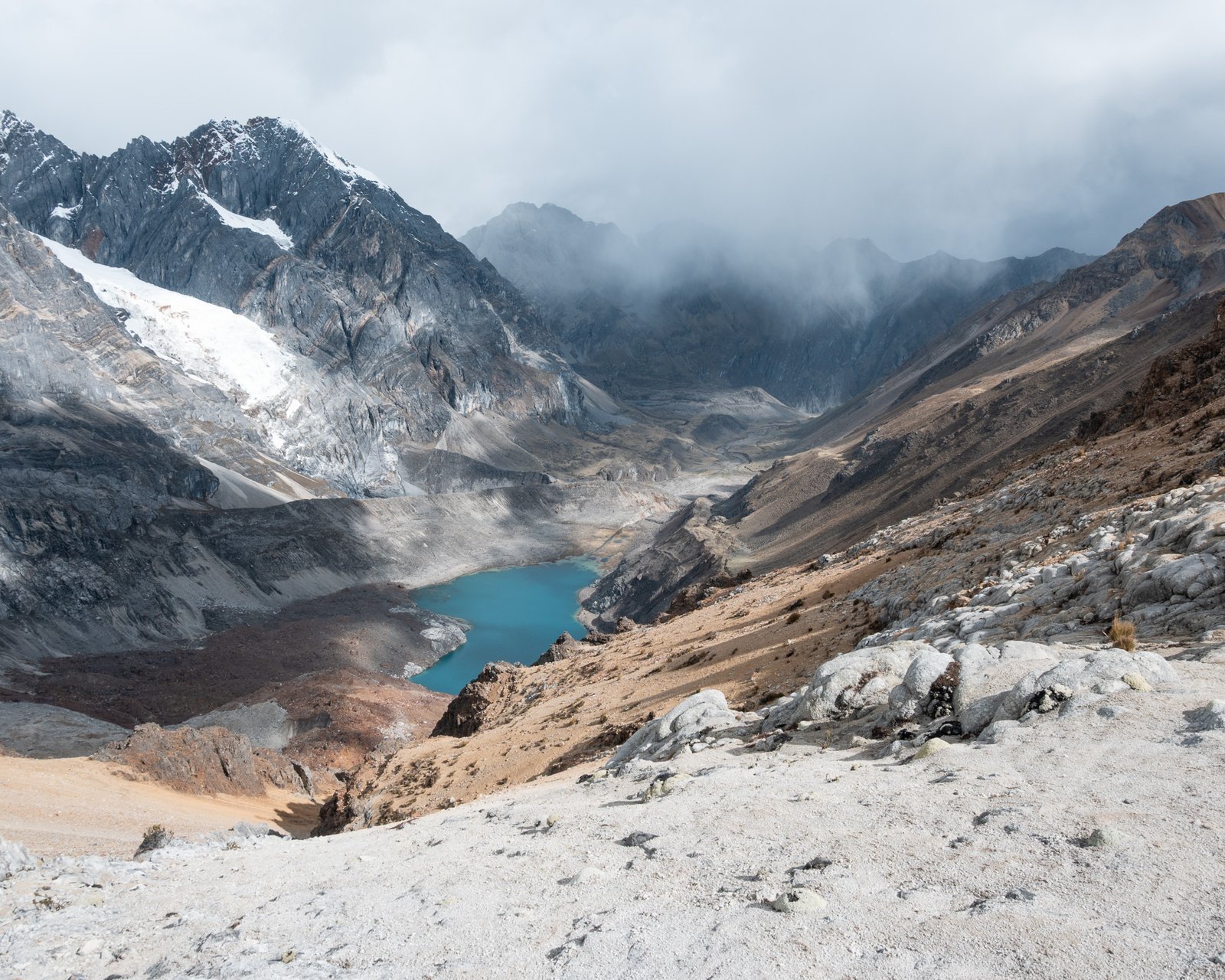
After what happened yesterday, I was keeping a very close eye on my GPS to make sure I was following the right route. But this pass is tricky, I’d follow what looked like the right trail, only to have it end out of nowhere, forcing me to climb further uphill to find it again.
After about three hours of climbing, I finally reached the summit. There were these strong, hard winds every now and then, trying to claim my rain jacket as an offering.
But standing at the highest point of the Huayhuash Trek at 5150 meters made me feel truly alive. I took pictures of the incredible surroundings: views over Siula Grande, the legendary Touching the Void locations, and on the other side a beautiful turquoise lake with an immense drop into the valley below.
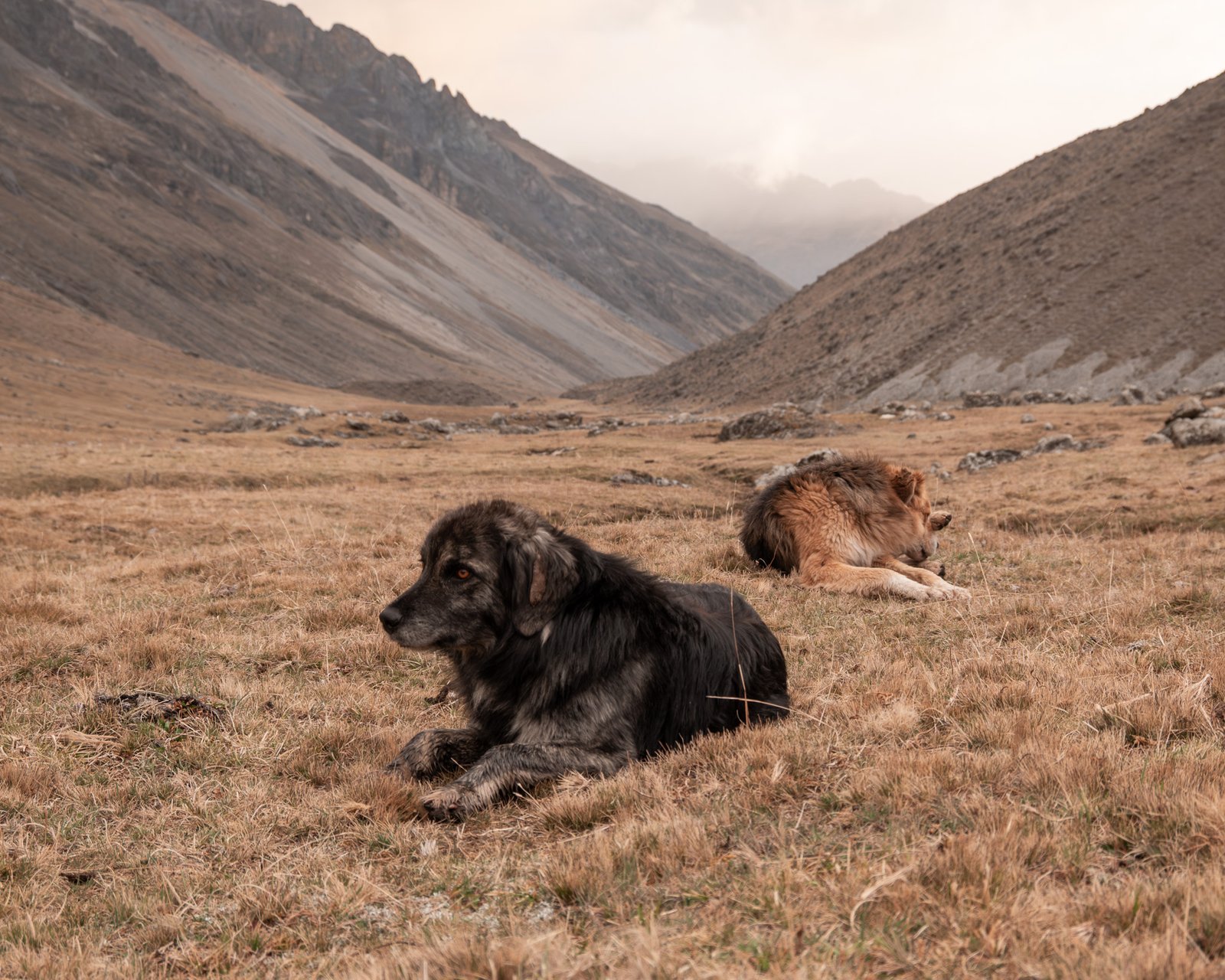
When setting up camp in the Yanantauri valley, two beautiful Huayhuash stray dogs appeared out of nowhere, accompanying me the whole evening and night.
There’s a famous legend on the trail about these mountain dogs. That they are guardians sent by the Apus (the local mountain spirits) to keep people safe. Whenever the path gets confusing, a dog appears out of nowhere, guides you through the terrain, and later quietly leaves to help the next traveler.
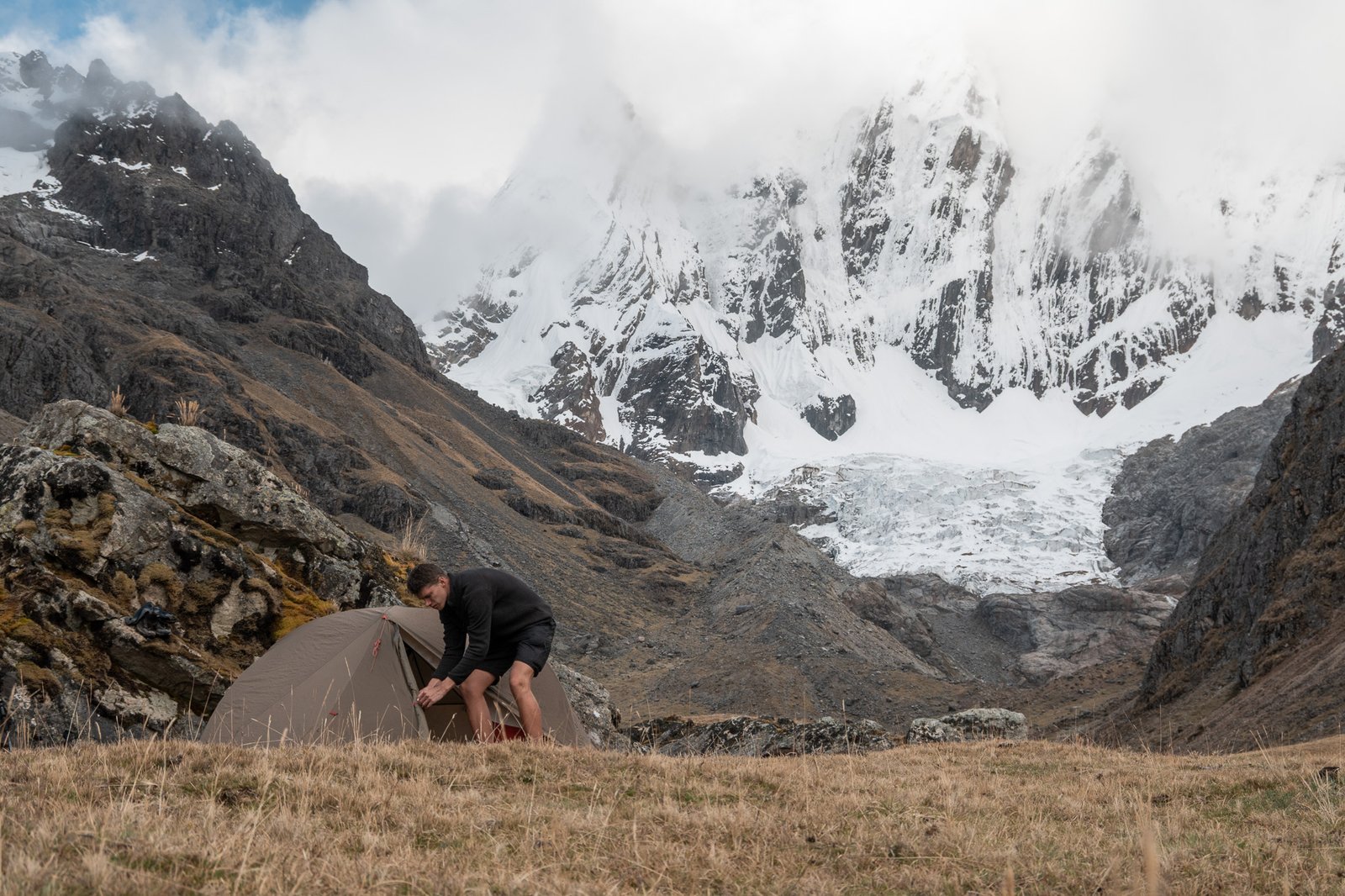
Tip: If you have time, I recommend the classic Huayhuash Circuit, which passes the Touching the Void locations and the highest point. Short on time? Take the O-Circuit instead: climb to San Antonio Pass for views of Siula Grande and the Touching the Void landscape, then head back south along the O-Circuit route.
DAY 6: Yanantauri valley – Huayllapa
In the morning the dogs held me company during the first two hours, but disappeared when I filled my water bottles.
Today was the first day without any mountain passes and mostly downhill paths. Walking further into the valley, I began passing more and more cattle. After about ten kilometers, the first signs of civilization appeared, small wooden sheds built by farmers to keep their cattle organized.
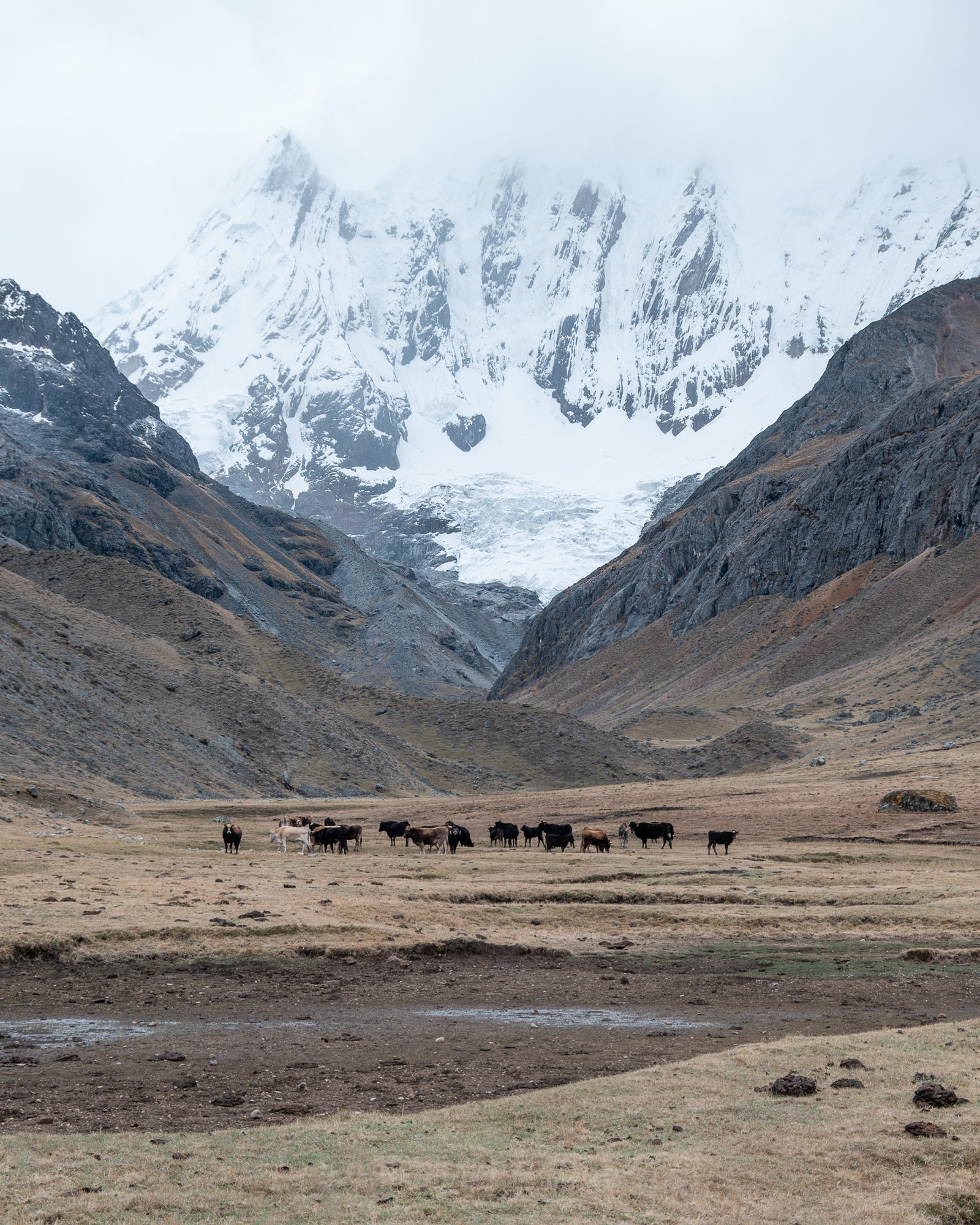
Here’s where I met Benjamin, a cattle farmer who told me he’s lived in this valley his entire life. He invited me over to show me his farm and started milking one of his cows. Later, his wife and daughter joined. Benjamin kindly offered me some warm milk straight from the bucket, of course I accepted.
Reaching the small town of Huayllapa felt strange. After days of solitude in the mountains, being back around buildings and people took a moment to get used to. Huayllapa is the only town on the Huayhuash Trek, and the only place where you can buy basic supplies, have a shower, and sleep in a normal bed.
Eating a good meal felt great. While exploring Huayllapa, I bumped into one of the stray dogs that had accompanied me earlier. As always in the Peruvian countryside, people were super friendly and helpful.
The owners of the hotel where I stayed told me they still remember the day in 1985 when Joe Simpson (Touching the Void) was carried into Huayllapa with his injured knee. They told me the whole town came out to see him.
While the comforts of civilization felt great, a part of me was also longing to get back into the solitude and adventure of the Huayhuash Trek.
DAY 7: Huayllapa – Gashapampa
After a great night in a normal bed, a shower, and great breakfast I started hiking again.
Whereas yesterday it was a long downhill walk, today it was almost all uphill. Two young boys were walking ahead of me on the trail. When I caught up and passed them, we had a short talk. They explained that they had to pick up two horses and bring them back to Huayllapa.
I didn’t end up crossing paths with the French or Australian couple again. Probably because of hiking two passes on one day at day four. (Though, about two months later, I randomly ran into the Australian couple again thousands of kilometers south in the Chilean Atacama desert).
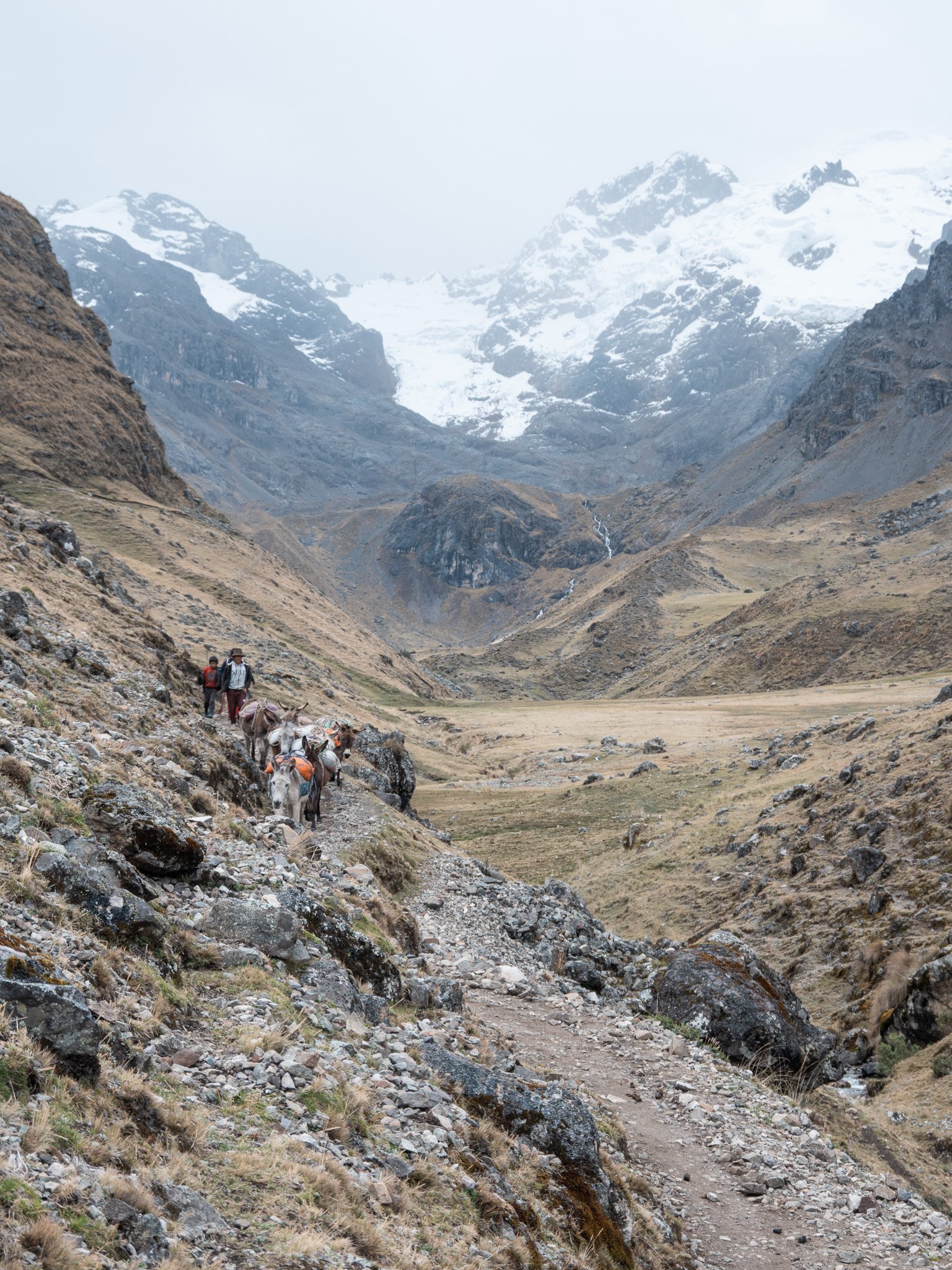
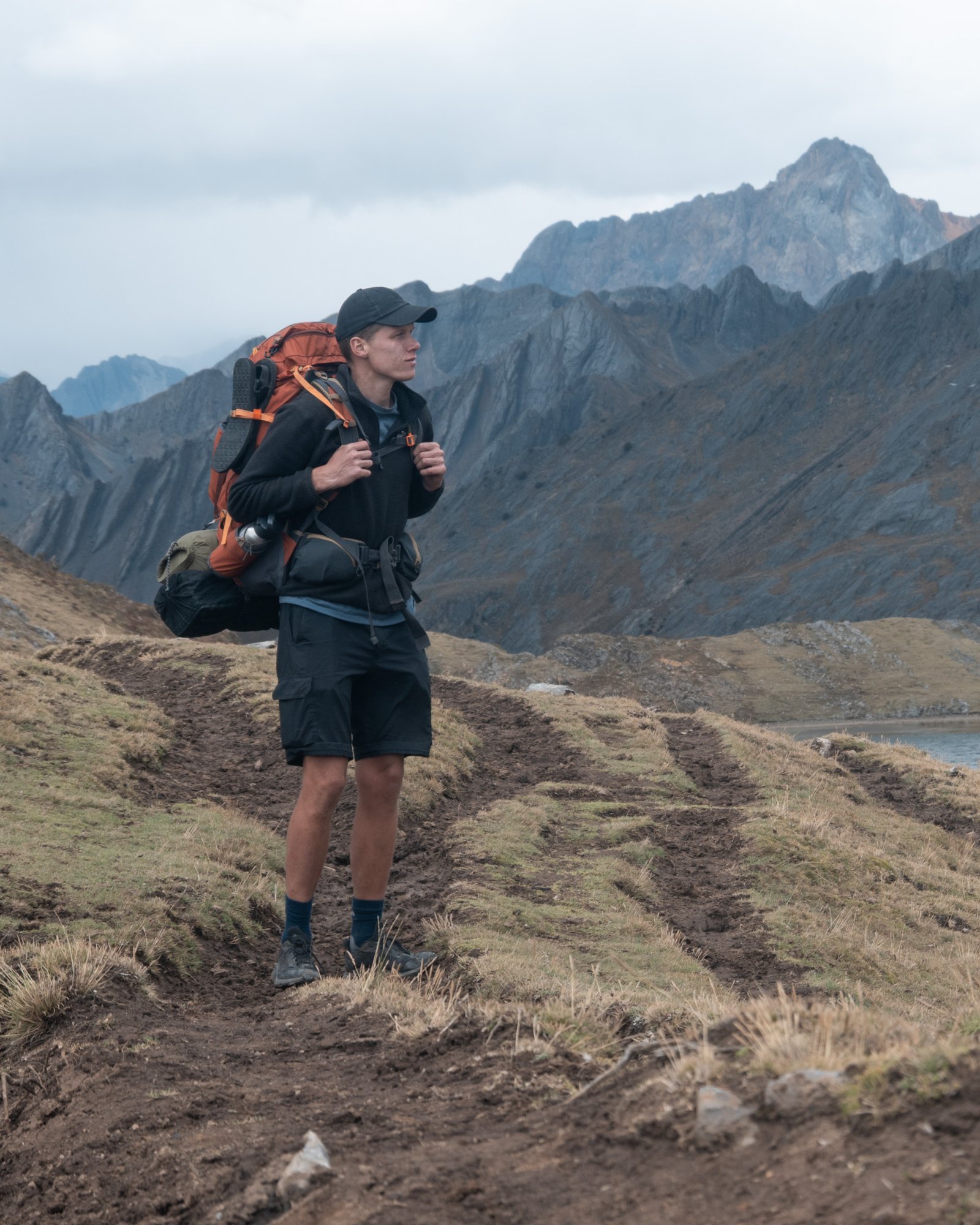
Today it’s the seventh day of the Huayhuash Trek, and I remember feeling a little emotional knowing this adventure was soon coming to an end. I found myself soaking in the landscapes even more than earlier days, to slow down and truly be in the moment.
By the end of the hike today, it started raining and later snowing. When I finally reached the summit, I could see Gashpapampa camp down below, there was a group tour.
Because of the bad weather, I went to seek shelter. There, I met three French hikers with their guides, along with the two lovely dogs from earlier. We shared hot tea and food, a warm and unexpected surprise.
DAY 8: Gashapampa – Jahuacocha
My original plan was to hike the classic Huayhuash Circuit in eight days, but because of bad weather yesterday, I stopped earlier and decided to add an extra day.
Rushing through an incredible place like this is a mistake, because not only will you regret missing the beauty, it also increases your risk of injury or making a misstep.
After today’s pass, the trail split into two: an easier path at the east, and a tougher trail along the western ridge. I took the west trail. The route over the ridge offered unforgettable views down over Laguna Jahuacocha.
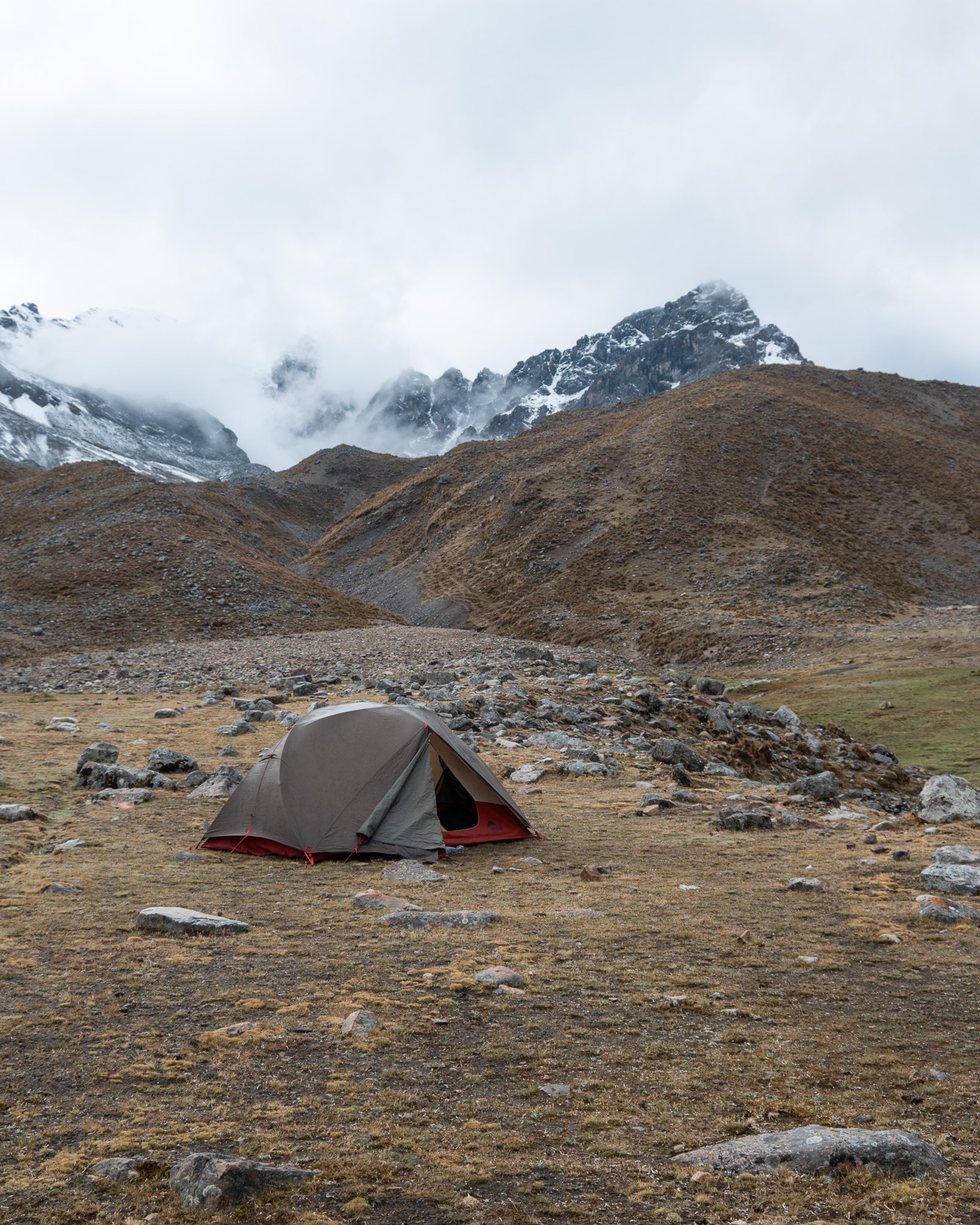
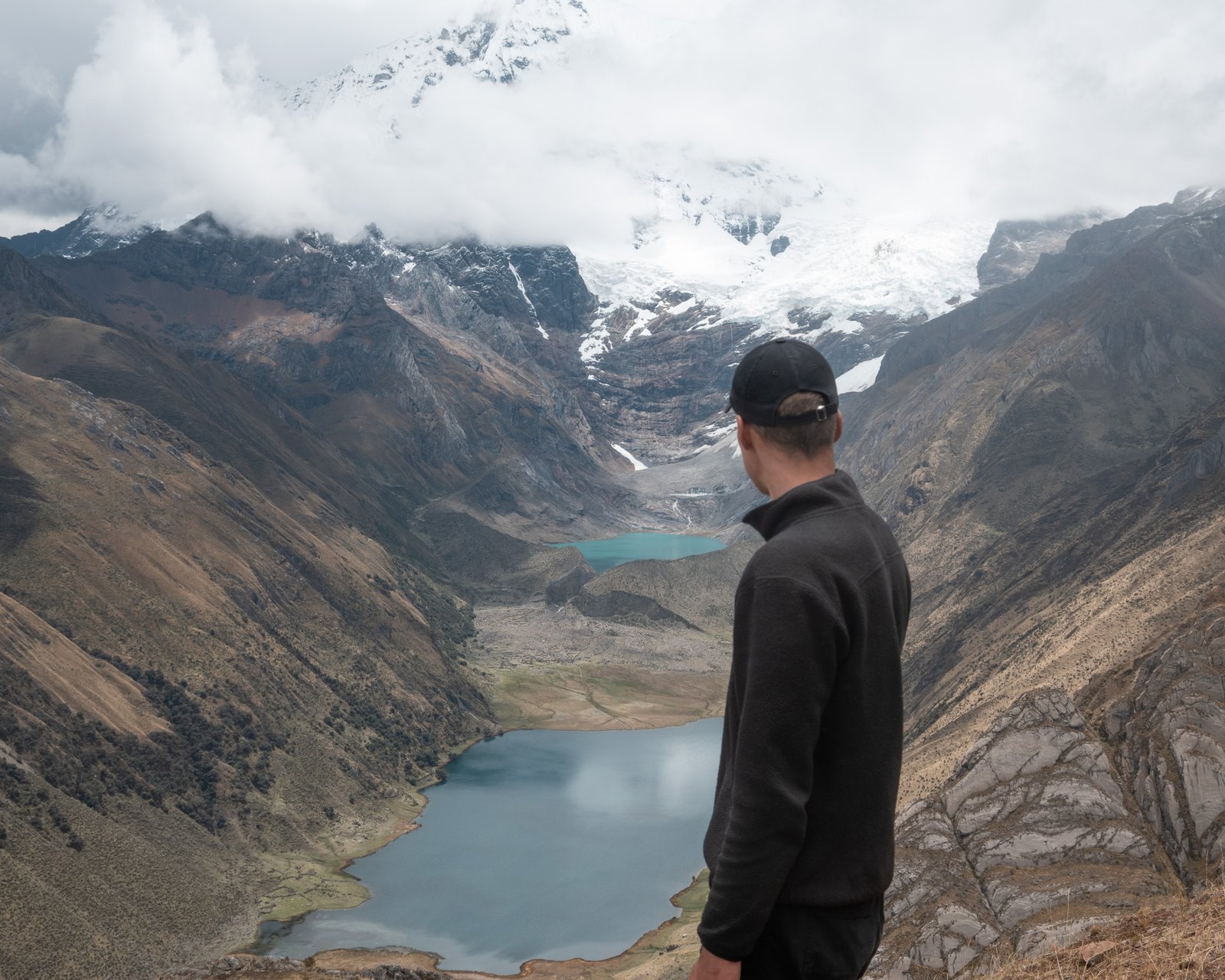
While hiking the ridge it started snowing again, but I couldn’t care less with those incredible views.
The trail turned into a long, steep descent, and my knee started acting up again. Each step was a reminder of how much I had endured over the past week.
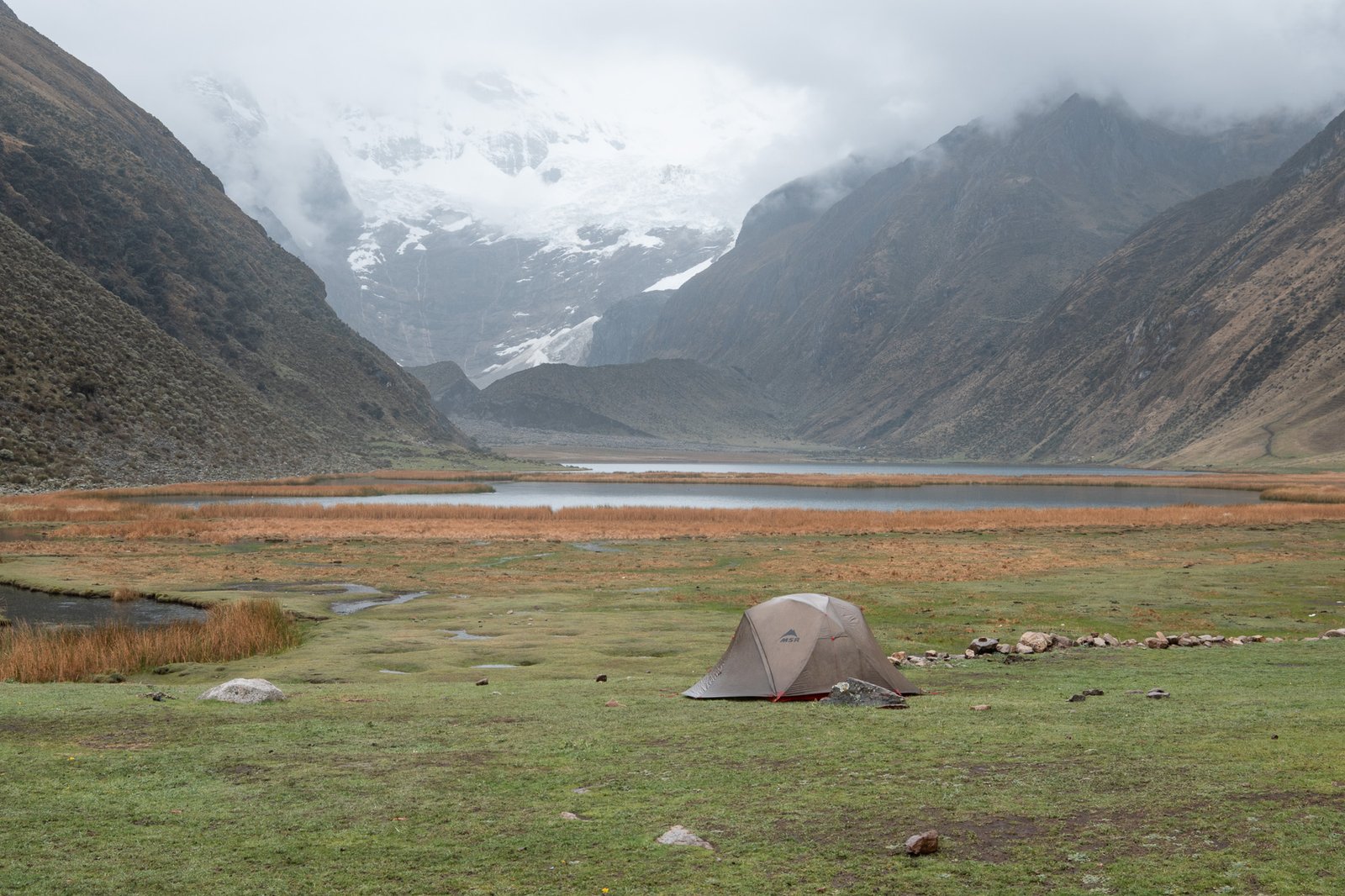
Then, in the distance, the final camp spot of my Huayhuash adventure came into view: Camp Inka Wain, right next to Laguna Jahuacocha. This camp was bigger than all the other ones. There were more horses, cattle, and to my surprise, there was even a local who sold chips and coca cola.
I met the group with the three French people again. We shared tea and ate dinner together in the main tent.
I remember having mixed feelings. On the one hand, I was sad that this adventure was coming to an end, but on the other, I was happy knowing that the next day I would complete it all by myself.
DAY 9: Jahuacocha – Llamac
Day nine, the final day of this adventure.
The group asked me if I wanted to join them to Rondoy, which is an alternative route to complete the Huayhuash Trek. Having hiked the entire way on my own so far, I told them I wanted to complete it by myself and chose to stick to my original route.
It was an incredible morning, with perfect weather and breathtaking scenery. I remember looking forward to climbing the very last pass of this hike. My backpack also felt significantly less compared to when I started.
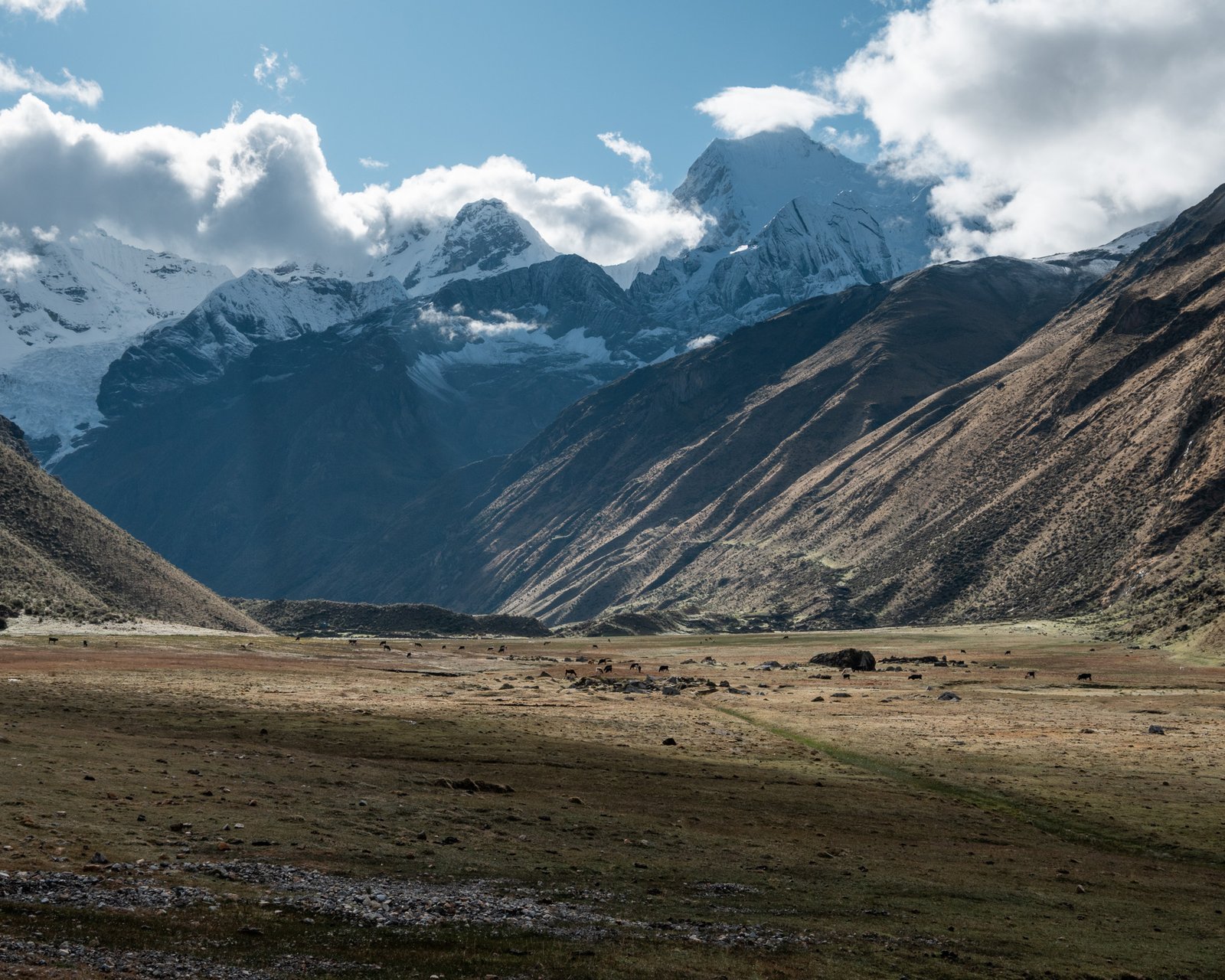
Luckily, the final day wasn’t as demanding as the other ones. There was one pass, reaching a height of 4285 meters. In truth, the descent down to Llamac was tougher than the climb, especially since my right knee was protesting.
Then, in the distance, I caught a first glimpse of Llamac, the final destination of this adventure.
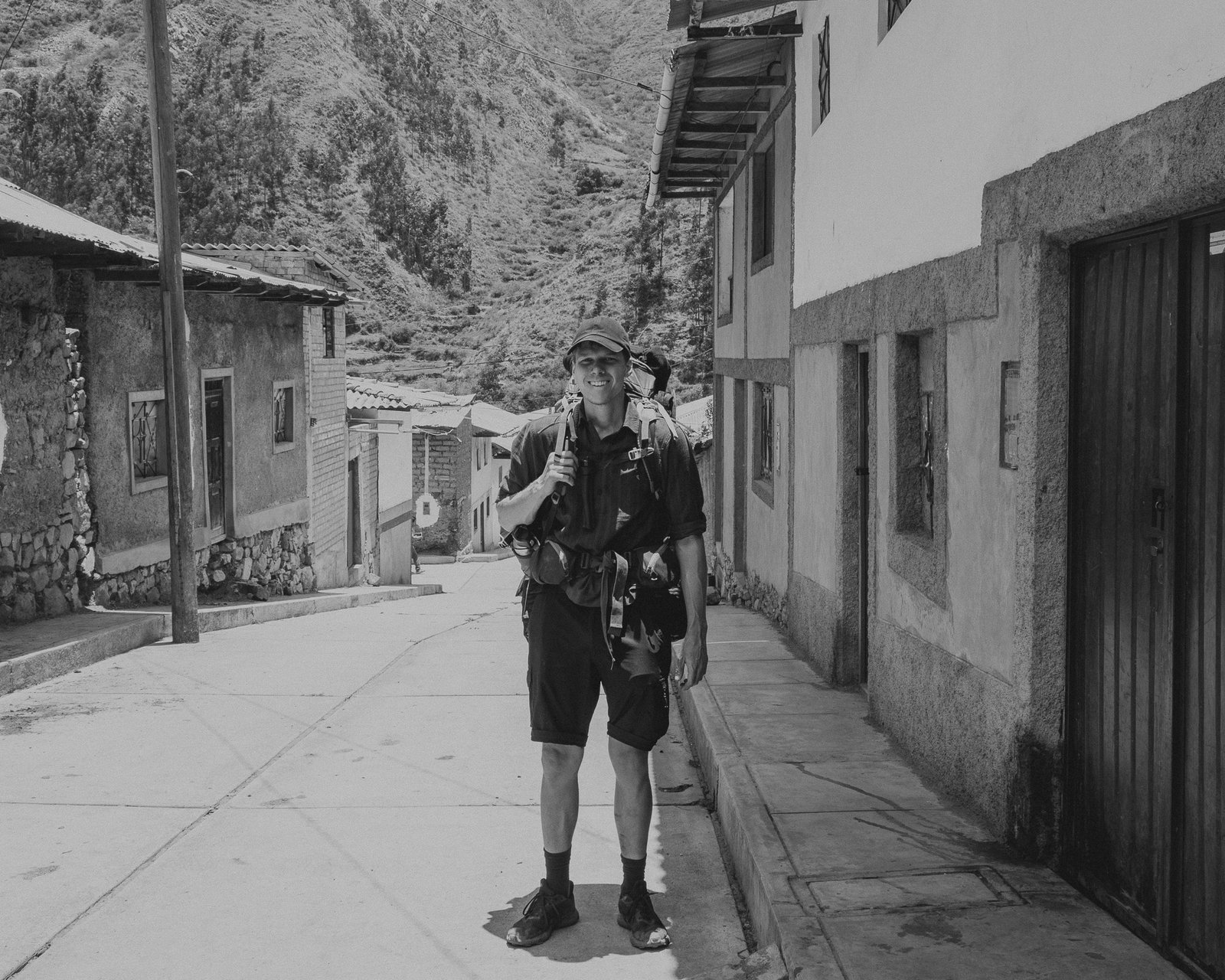
When walking my final steps into Llamac, something happens I think every adventurer can relate to. You reach the end, but there are no people cheering for you, there’s no fireworks, no family or friends waiting with open arms. And you realize that it was never about the finish line anyway: the magic was in the struggle, the solitude, and the raw beauty of the trail itself.
PREPARING FOR THE HUAYHUASH TREK
Huayhuash Trek Solo: GPX download
Planning to hike the Huayhuash? I share my field-tested GPX routes for free.
Interested in the GPX? Just leave a comment below, or follow me on Instagram and send me a message.
Huayhuash Trek Solo: Packing list
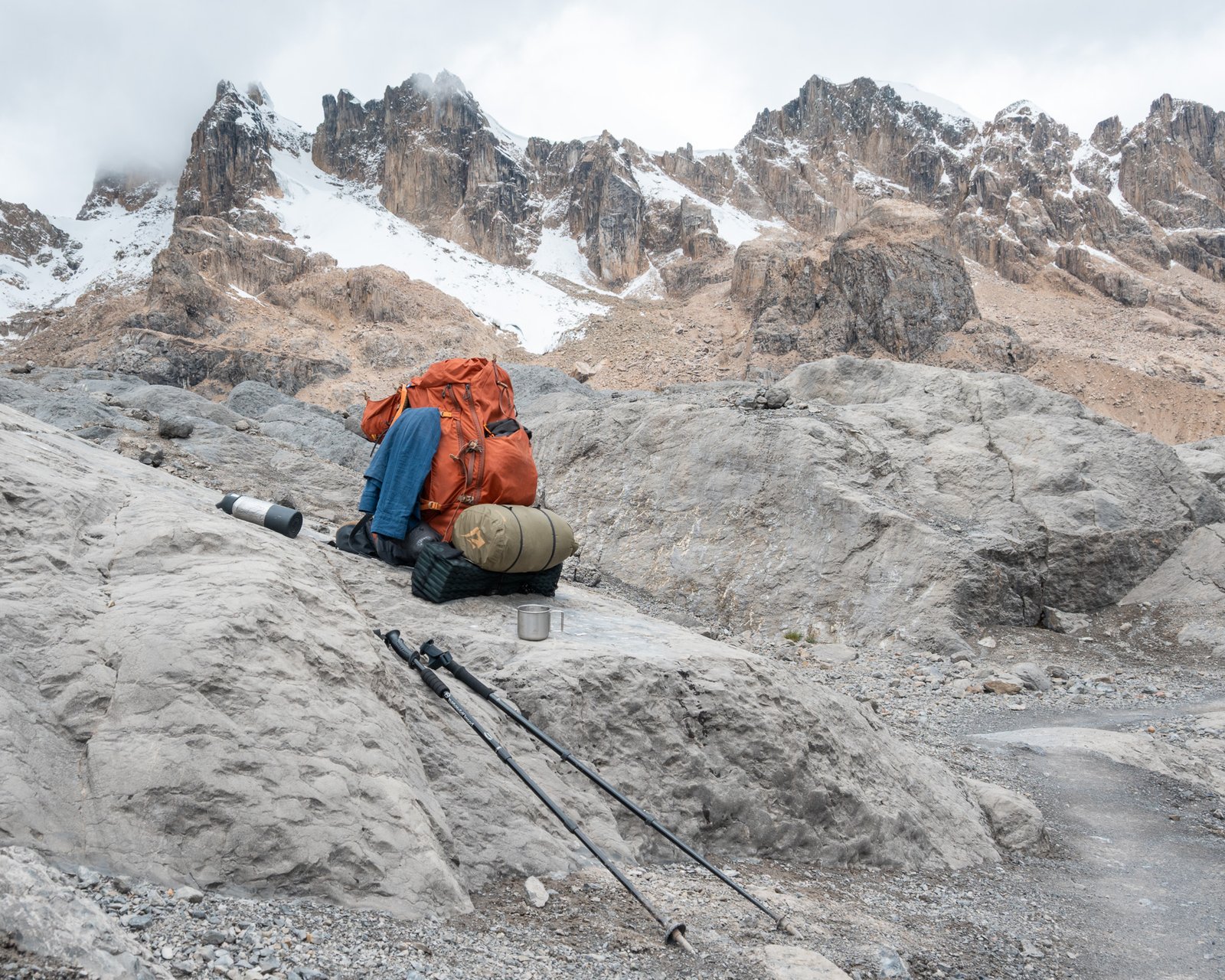
Camping and hiking gear
- tent: water- & windproof
- backpack 40-70 L + waterproof cover
- sleeping mat
- sleeping bag
- inflatable pillow
- hiking poles recommended (they saved me about five times from falling)
- physical map with route overview
Clothes: top & bottom layers
- hiking boots / Trail runners (waterproof)
- rain jacket
- warm jacket (down or insulated)
- fleece sweater
- hat
- beanie
- gloves (I didn’t have waterproof gloves, but I’d recommend waterproof ones)
- neck warmer
- sunglasses
- trousers (waterproof)
- shorts (nights are cold, but during the day it gets quite warm)
- thermal pants (wearing dry thermal pants after all the hiking is heaven)
- 2-3 pairs of hiking socks
Food & cooking
- gas stove
- gas bottle (I took one 240g gas bottle with me and still had enough left)
- cooking utilities
- sharp knife, fork, spoon
- food, lots of food (jump to the in-depth Huayhuash Food & Supplies guide)
- water bottles (use water filter or purifying tablet when you don’t fully trust it)
- electrolytes, vitamin pills, etc.
- lighters (Put them in a dry ziploc bag, bring at least two)
- snacks like: nuts, bars, chocolate, dried fruits, raisins (jump to the in-depth Huayhuash Food & Supplies guide)
Electronics & safety and navigation
- phone
- camera (+ tripod)
- charging cables
- batteries
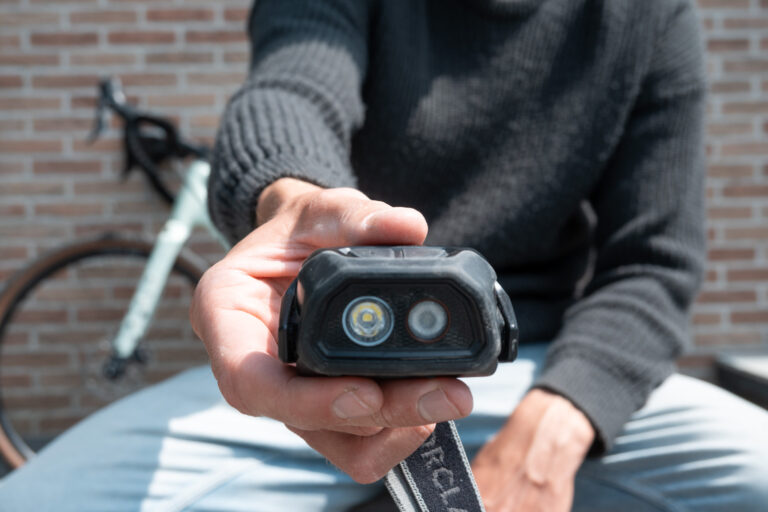
- headlamp
- cash (I took 500 Soles with me, you can’t use your card anywhere)
- power bank(s)
- first aid kit
- sun protection
- physical map with route overview
- maps.me (free app) and the offline map of this region
- book / e-reader
- paper & pencil
- optional: insulated water bottle
Huayhuash Trek Solo: Food plan
When going solo you’ll have to carry your own food and cooking supplies for the entire trek. After leaving the trailhead, you can’t restock anywhere, though you may be able to find a few things in Huayllapa.
Keep your food setup light and efficient. Focus on foods that are calorie-rich, compact, and easy to cook at altitude.
To save money, consider bringing your food from home or buying them in a larger city before heading to Huaraz. Prices in Huaraz are significantly higher, especially for specialty hiking and camping foods.
FAQ
Is hiking the Huayhuash Trek Solo realistic?
- Yes, but don’t underestimate it. If you want to hike the Huayhuash solo, I’d recommend having moderate to advanced hiking experience.
- The Classic Huayhuash Circuit usually takes 7–12 days. If the classic circuit sounds like too much, there are shorter routes you can consider, although you’ll miss some of the highlights.
- Some of these climbs are steep and physically demanding. Add a 15+ kg backpack and the fact that much of the trek sits above 4,000 meters, and you have a seriously challenging hike.
What surprised you?
- The biggest surprise was just how remote the Huayhuash felt. I expected to encounter way more hikers. There were long stretches where it felt like I had the mountains completely to myself.
- I underestimated how much work goes into planning the trek independently. When you’re doing everything yourself, there’s a lot to figure out; the route, the best camp spots to food, gear, transportation, and daily logistics.
- Almost the entire trek is above 4000 meters, which makes everything feel harder. I’d definitely recommend spending some time in Huaraz to do a few acclimatization hikes.
- Don’t underestimate the weather. It’s extremely unpredictable, so you need to be prepared for conditions to change quickly.
What would you do differently?
- I’d choose a drier month. I went at the end of October, each afternoon brought rain, hail, and sometimes even snow. The weather made some days considerably harder.
- I’d stock up on more supplies before getting to Huaraz. Prices can be high there, even small things like water purification tablets, so buying them in a larger city beforehand would have saved me money.
- I definitely wouldn’t attempt two passes in a single day again. It was brutally difficult, especially with the altitude and a full backpack.
- I’d bring more cash for unexpected expenses. You never know when you’ll need a little extra along the way.
Have any other questions about the Huayhuash? Leave them in the comments below or send me a DM on Instagram, I’ll be happy to share what I learned from my own experience.
CONCLUSION
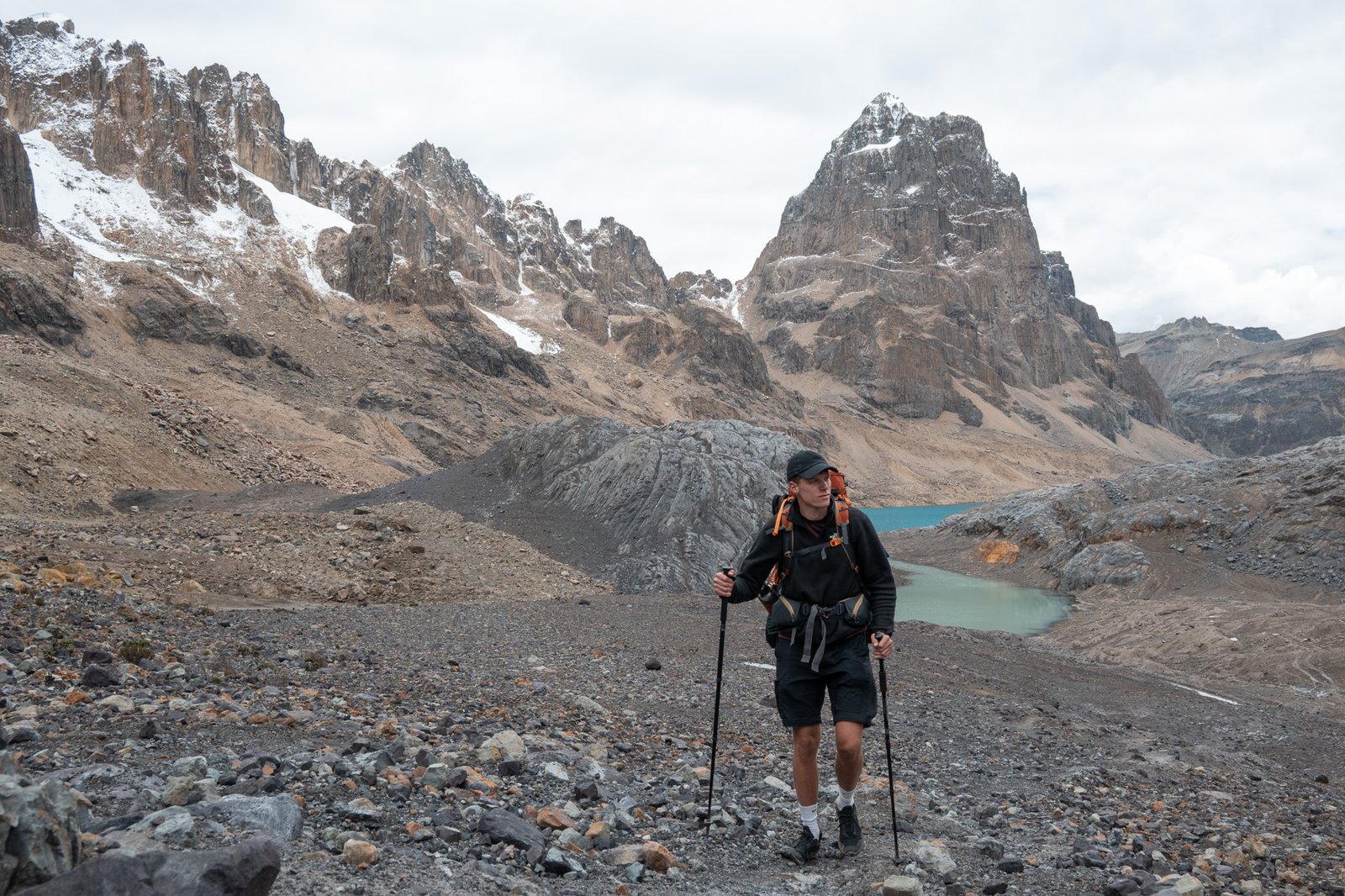
I’ve been writing this post with a smile on my face. Sharing information about the Huayhuash Trek brought back so many memories, and reminded me of the small moments that made this adventure so special.
If you’re thinking about hiking the Huayhuash Trek, don’t wait, don’t let years pass by only to look back and wish you had done it.
The Huayhuash Trek is incredible, and I can absolutely recommend it to anyone out there who has a passion for hiking. It’s 1000% worth it.
Follow me on Instagram for more travel stories, guides, and tips.
Want to keep reading? You can find all posts here.
See you out there as we break away.
– Bart
Support me with a coffee ☕
I created breakawaywithbart because I love writing, sharing experiences, and helping others.
Breakawaywithbart is completely free of ads or sponsored content to give you the best reading experience.
If this post helped you, you can support breakawaywithbart by treating me to a coffee via the button below.
Completely optional, but really appreciated!